Local Property Taxes and the Pressure They Create
Clifton carries one of New Jersey's heaviest property tax loads, and New Jersey already leads the nation with a 2.49% average effective rate. The city's general tax rate sits near $5.79 per $100 of assessed value, but because Clifton hasn't done a full revaluation in years, its equalization ratio has fallen to roughly 31.9% — meaning homes are assessed at about a third of true market value. The practical result is a median annual tax bill around $9,809, and it varies sharply by ZIP: roughly $9,108 in the 07011 section versus $10,476 in the 07013 area, driven by school and assessment differences. For an equity-rich owner who bought an Athenia cape decades ago, a nearly $10,000 yearly bill quietly erodes the gain. For a relocating seller already carrying a new mortgage elsewhere, it is a second clock running.
How New Jersey Foreclosure Law Affects Your Options
Clifton foreclosures move through New Jersey's judicial system, filed in the Passaic County vicinage of Superior Court — the same slow docket that handles neighboring Paterson. Expect 18 to 24 months or longer from first filing to sheriff's sale, with a 10-day redemption window after the sale that is largely theoretical given the timeline. New Jersey also requires an attorney at closing, so every sale carries legal cost. For Clifton owners the long timeline cuts both ways: a relocating contractor or transferring professional usually has time to sell cleanly before a case concludes, but taxes near $800 a month plus HOA dues on Allwood or Richfield condos keep accruing the longer you wait. The real advantage here is that Clifton's stable, owner-occupant demand and high built-up equity mean most sellers never need the courts at all.
Clifton's Housing Stock and the Inspection Problem
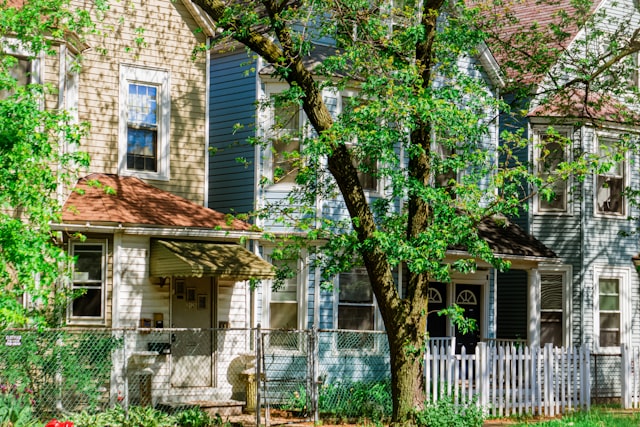
Clifton's housing is overwhelmingly the post-war Cape Cod and center-hall Colonial — modest frame and brick homes built largely between the 1920s and 1950s as the city filled in around Route 3 and the rail lines. Unlike Paterson's industrial rowhouses, Clifton is a city of single-family owner-occupants, which is exactly why inspection surprises sting. The recurring issues here are buried underground oil tanks — a classic North Jersey deal-killer that triggers costly remediation — plus knob-and-tube wiring, original cast-iron plumbing, asbestos in 1950s boiler insulation, and lead paint in anything pre-1978. Montclair Heights homes near the Montclair State University edge and older Botany Village frames tend to show the most deferred maintenance. A financed buyer's inspector flags these fast, and FHA appraisals routinely require the oil tank be tested or removed before closing.
Why Neighborhoods Matter More Than Citywide Averages
A single citywide median hides real spread across Clifton's sections. Allwood, hugging the Bloomfield border with well-kept Colonials near the Route 3 shopping corridor, consistently commands the city's top prices and draws financed move-up buyers. Montclair Heights, on the Montclair line near Montclair State University, and Athenia, with its walkable Van Houten Avenue and Colonial Revival capes, both attract conventional buyers willing to wait for the right home. By contrast, Botany Village in the north and Lakeview along the Paterson border are denser, with more two-families and a higher share of investor and cash activity. Delawanna's southeastern blocks near the rail yard and Route 21 sit closer to industrial uses, which softens demand. Knowing whether your home is a Rosemawr colonial or a Lakeview multifamily changes which buyer pool — and which price — is realistic.
What You Actually Save by Skipping the Traditional Route
On a $600,000 Clifton home, the traditional route carries real friction. A 6% commission is $36,000. New Jersey's realty transfer fee at this price runs roughly $4,800 to $5,400, paid by the seller. Mandatory attorney closing costs add $1,500 to $2,500. Then come the pre-sale repairs Clifton inspections demand — oil tank removal, electrical updates, a dated kitchen — easily $10,000 to $25,000 on an older Athenia or Botany Village cape. Holding costs at roughly $818 a month in taxes across a two-to-three-month listing add another $1,600 to $2,500. That is $54,000 to $71,000 gone. For a relocating seller juggling a new mortgage, or an equity-rich owner who just wants the proceeds clean and the keys handed over, a cash offer near $540,000 with no commission, no repairs, and a close on your date often nets more than the listed sale.
