Local Property Taxes and the Pressure They Create
Bergen County and the City of Hackensack, the county seat, carry obligations shaped by New Jersey's top-in-the-nation 2.49% average effective rate. Hackensack's 2025 general tax rate is $3.209 per $100 of assessed value, an effective burden near 2.527% — slightly above the state average. The median Hackensack tax bill reached roughly $9,259 in 2025, and on the city's ~$435,000 median sale price the math lands closer to $10,500–$11,000 a year. The 2026 estimated rate of $3.524 signals further increases. Prospect Avenue condo owners pay these levies on top of monthly HOA fees, while Fairmount and Summit Avenue homeowners shoulder full single-family bills. With Hackensack University Medical Center and the county courts anchoring a service-heavy economy, one job relocation, divorce, or medical event can make a five-figure annual tax obligation untenable fast — even for an owner who isn't otherwise distressed.
How New Jersey Foreclosure Law Affects Your Options
Hackensack operates under New Jersey's judicial foreclosure system, with a local irony: the Bergen County Justice Center at 10 Main Street — where these cases are heard — sits in downtown Hackensack itself. Every foreclosure begins as a lawsuit, routed through the state Office of Foreclosure for uncontested files and Bergen's Superior Court vicinage for contested ones. The full timeline routinely runs 18 to 24 months or longer, among the slowest in the country, and New Jersey's court foreclosure mediation program can stretch it further. After the sheriff's sale, the 10-day redemption window offers little practical relief for an owner already a year behind. New Jersey is also an attorney-close state, so every sale requires a real estate attorney at the table. The real leverage exists in the first 6 to 12 months after default — before accruals erode equity. Relocating owners who act early preserve the most.
Hackensack's Housing Stock and the Inspection Problem
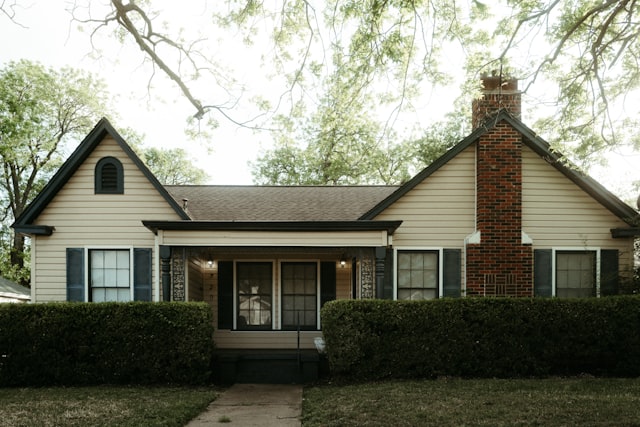
Hackensack reincorporated as a city in 1921, and its housing tells two very different inspection stories. Along Prospect Avenue, a 1960s–70s high-rise boom produced condo towers like Bristol House and Carlyle Towers, joined by 1980s buildings such as World Plaza North (1987, 257 units) and Executive House (1986, 190 units). These units trip up financing through warrantability problems — underfunded reserves, special assessments, master-insurance gaps, and post-Surfside structural reviews that scare conventional lenders off. By contrast, Fairmount, Summit Avenue, and Red Hill hold 1920s brick-and-clapboard colonials, Craftsman bungalows, and Victorians, where inspectors flag knob-and-tube wiring, lead paint, asbestos, and New Jersey's signature headache: buried underground oil tanks needing costly remediation. Two-families in Cherry Hill and Hackensack East often carry decades-old conversions. Either way, the inspection report — not the listing price — is what kills traditional deals here.
Why Neighborhoods Matter More Than Citywide Averages
Hackensack's submarkets diverge sharply, and a citywide median hides it. The Prospect Avenue corridor is a condo world — values rise and fall with HOA health, reserves, and assessments, and warrantability issues push many sales toward cash buyers. Fairmount and North Fairmount, tree-lined with restored colonials and bungalows, form the strongest owner-occupant single-family market, holding value with conventional financing. Summit Avenue mirrors that strength. The Green and the Main Street District downtown are transit-oriented and mid-redevelopment, with new towers rising near the Hackensack Bus Terminal and Pascack Valley Line stations, churning sellers in and out. Red Hill, Cherry Hill, and Hackensack East skew toward older modest single-families and two-families with thinner retail-buyer pools. North Hackensack, near the river, mixes the two. A relocating seller priced off the wrong comp — condo versus colonial — can sit on the market for months.
What You Actually Save by Skipping the Traditional Route
On a $435,000 Hackensack sale, the traditional route bleeds equity before you see a check. A 6% commission runs $26,100. New Jersey's realty transfer fee costs the seller roughly $3,800. Attorney closing — mandatory here — adds $1,500 to $2,500. If it's a Prospect Avenue condo with a pending special assessment, or a Summit Avenue colonial needing oil-tank removal ($2,000–$3,000), lead, or electrical work, repairs realistically run $8,000 to $20,000. Holding costs at about $915 a month in taxes over a two-to-three-month listing add another $1,800 to $2,700. Total deductions of $40,000 to $55,000 are common. For the relocating, equity-rich seller — the contractor moving for a new posting, the owner who just bought and needs out fast — a cash offer near $390,000 closing in three weeks, with no staging, no assessments, and no condo questionnaire, often nets more and keeps the move on schedule.
