Local Property Taxes and the Pressure They Create
Bangor sits in Penobscot County — Maine's second-largest county by area and a regional hub for northern and eastern Maine. Maine's effective property tax rate is 1.36%, ranking 14th nationally, and Bangor's city mill rate has historically run higher than the state average relative to assessed values. At an average home price of $245,000, Bangor homeowners pay roughly $3,332 per year in property taxes. Penobscot County's economy is tied to healthcare, education, and regional commerce — sectors that have had layoffs and restructuring in recent years. Homeowners who lose jobs in these sectors find the monthly tax and mortgage combination unsustainable faster than they expect, and Bangor's housing market doesn't have the deep buyer pool that Portland enjoys.
How Maine Foreclosure Law Affects Your Options
Maine uses judicial foreclosure with a 12-to-18-month timeline, and Penobscot County processes its foreclosure caseload through the state court system. Maine's mediation program applies in Bangor just as statewide — if the homeowner asks for it, the court must send the case to formal mediation before it can proceed to sale. Homeowners also get 90 days after the foreclosure judgment to redeem, before any sale. In practical terms, this means a Bangor homeowner who receives a foreclosure filing in January may not face a final sale until well into the following year. That window is real time to find a buyer. The risk is assuming the timeline means you have unlimited room to wait — because courts don't pause indefinitely, and mediation doesn't guarantee a modified loan.
Bangor's Housing Stock and the Inspection Problem
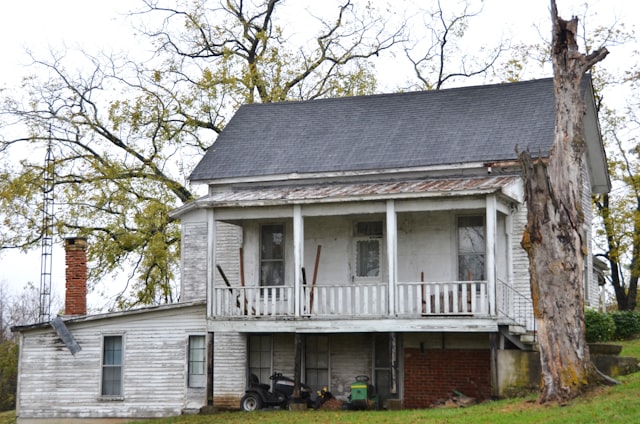
Bangor's housing stock reflects its 19th-century commercial prominence — the city was once a major lumber-trading hub, and the residential neighborhoods around Downtown, Broadway, and Ohio Street are filled with Victorians and colonials built in that era. French Street and Somerset Street have denser multi-family homes from the early 1900s. Fairmount and Fruit Street have some mid-century ranches and capes in better structural shape. Hammond Street runs through a mixed corridor. Lead paint, old cast-iron plumbing, and aging electrical systems are common across the older Downtown-adjacent neighborhoods. FHA buyers, who represent a significant share of Bangor's buyer pool at the $245,000 price point, frequently run into lender-required repair conditions before any loan can close.
Why Neighborhoods Matter More Than Citywide Averages
Bangor's neighborhoods split into distinct demand zones. Broadway has tree-lined streets, well-maintained homes, and consistent owner-occupant demand. Hammond Street and Ohio Street attract buyers who want established neighborhoods without Broadway's premium. Downtown and French Street see more investor activity and slower owner-occupant absorption. Somerset Street and Fairmount have functional housing but limited buyer depth. Fruit Street sits between investor and owner-occupant territory depending on the specific block. A distressed home on Somerset Street and a comparable on Broadway can differ by $40,000 to $60,000 in achievable price — and the Broadway home will sell in weeks while Somerset sits for months.
What You Actually Save by Skipping the Traditional Route
At Bangor's average of $245,000, the costs of a traditional sale are substantial relative to the final number. A 6% commission is $14,700. Maine's transfer tax on the seller's portion runs approximately $539. Closing costs at 2% to 3% add $4,900 to $7,350. Repairs on Bangor's older Victorian and early-20th-century stock — lead remediation, roofing, plumbing — typically run $8,000 to $20,000 before the property is retail-ready. Carrying costs over 60 to 90 days in a market with Bangor's slower absorption run $1,800 to $2,800 per month. Total erosion on a $245,000 sale can hit $33,000 to $50,000. A cash sale takes the property as-is, and puts a clean number in the seller's hand.
