Local Property Taxes and the Pressure They Create
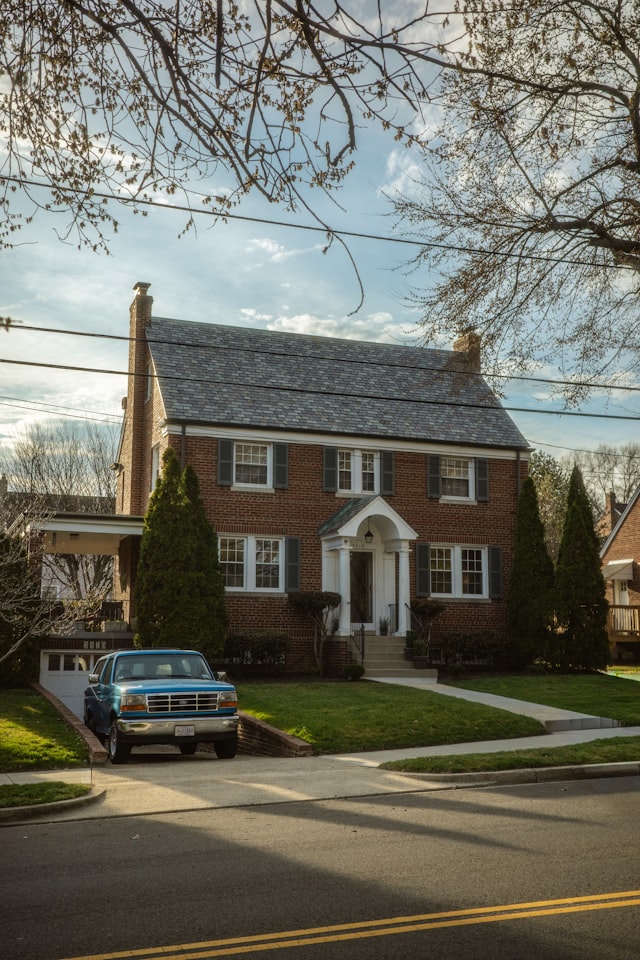
Fargo sits in Cass County, which applies North Dakota's 0.98% effective property tax rate — the 22nd highest nationally, near the national median. On Fargo's $265,000 median home price, that's approximately $2,597 per year. Cass County has seen consistent growth over the past two decades, and assessed values in neighborhoods like South Fargo, Rose Creek, and the Osgood area have risen alongside new development. In established older neighborhoods like Hawthorne and Downtown Fargo, properties that haven't kept pace with renovation trends can be caught in a gap — high enough assessed values to generate meaningful tax bills, but priced too low to attract retail buyers who want move-in-ready condition. North Dakota doesn't charge a state transfer tax, and recording fees are the only closing cost on the seller side from a tax standpoint — a cleaner closing structure than many states.
How North Dakota Foreclosure Law Affects Your Options
North Dakota requires judicial foreclosure, which means Fargo homeowners in default face a 3-to-6-month process through Cass County District Court before a sheriff sale occurs. One of North Dakota's borrower protections is the right to cure the default and reinstate within 30 days of the notice before foreclosure. If you can pull together the overdue payments and associated costs, you can stop the process entirely. After the sale, there's a 60-day redemption period during which you can reclaim the property by paying the full sale price plus costs. That window is short — 60 days is not enough time to arrange financing in most circumstances. The practical implication is that Fargo homeowners have more leverage before the sale than after it, and selling before the sheriff sale is the most effective way to preserve equity.
Fargo's Housing Stock and the Inspection Problem
Fargo's housing market has two distinct personalities. The older residential core — Downtown Fargo, Oak Grove, Hawthorne, and Trollwood — has housing stock dating from the early 1900s through the 1960s, with frame construction, older plumbing, and electrical systems that reflect mid-century standards. These properties also sit in a region where Red River flooding has historically caused basement water intrusion and foundation moisture issues — Fargo has invested heavily in flood infrastructure, but individual properties vary significantly in how well they've been protected and maintained. South Fargo, Rose Creek, and Osgood represent newer development with standard suburban construction profiles — better mechanicals, but higher price points that limit cash buyer activity. For older homes near the river corridor, moisture history and foundation condition are the first things a smart buyer investigates, and findings there frequently complicate retail financing.
Why Neighborhoods Matter More Than Citywide Averages
Fargo's $265,000 average reflects a market that runs the full spectrum. Downtown Fargo has seen significant commercial and mixed-use investment, but the residential stock within walking distance includes aging apartments and older single-family homes where condition drives price dramatically. Oak Grove is an established neighborhood with consistent owner-occupant demand, but its character homes require ongoing maintenance that owners sometimes defer. Hawthorne, one of Fargo's older neighborhoods, has steady values but also a housing stock that's susceptible to deferred maintenance accumulation. South Fargo and Rose Creek are the suburban-growth side of the equation — newer, cleaner, but priced above the range where cash buyers typically focus. North Fargo sits in between — older and more affordable, with a buyer pool that includes investors and owner-occupants willing to do work. Your specific neighborhood determines which type of buyer is most likely to close.
What You Actually Save by Skipping the Traditional Route
On a $265,000 Fargo home, the traditional sale math is straightforward. Six percent agent commissions run $15,900, and 2 to 3% in seller closing costs add $5,300 to $7,950. North Dakota charges no state transfer tax, so recording fees are the only government charge — keeping closing costs leaner than most states. Even so, you're at $21,200 to $23,850 before any repairs. In Fargo's older housing stock — Hawthorne, North Fargo, the Downtown residential blocks — inspection findings related to basement moisture history, plumbing age, and electrical updates regularly generate $7,000 to $18,000 in repair negotiations. Add 60 to 90 days of holding costs at $1,500 to $1,900 per month in mortgage, taxes, and utilities, and the total cost of a traditional sale approaches $30,000 to $35,000 on a $265,000 home. A cash offer that closes in two weeks sidesteps every one of those costs.
