Local Property Taxes and the Pressure They Create
Green Bay falls in Brown County, and at Wisconsin's 1.85% effective property tax rate — 5th highest in the nation — the city's average home price of $218,000 generates roughly $4,033 per year in taxes, or about $336 per month. Brown County's tax burden reflects a growing metro that funds multiple school districts, a regional airport, and expanding infrastructure as the Fox Valley corridor continues to densify. Green Bay proper carries higher mill rates than suburban communities like Allouez and Ashwaubenon because of the city's legacy public service costs. For homeowners in older Green Bay neighborhoods who bought during the pre-2020 market and are now managing financial stress, that $336/month tax bill compounds quickly against a mortgage and utility costs that haven't dropped. Brown County's two-year delinquency threshold for tax foreclosure gives limited runway.
How Wisconsin Foreclosure Law Affects Your Options
Wisconsin's judicial-only foreclosure process applies fully in Brown County. Lenders must file in Brown County Circuit Court, serve the homeowner, and obtain a judgment — a process that takes 10 to 14 months. After the foreclosure judgment is entered, the sale can't happen for 3 to 12 months (usually 3 or 6 months for mortgages signed since April 27, 2016), and homeowners can pay off the judgment until then. That window also means a homeowner can spend well over a year in foreclosure proceedings before the property is sold at sheriff's sale. Throughout that period, credit is damaged and debt is growing. A sale that closes before the foreclosure judgment lets the seller control the outcome rather than waiting for Brown County's court calendar to decide it.
Green Bay's Housing Stock and the Inspection Problem
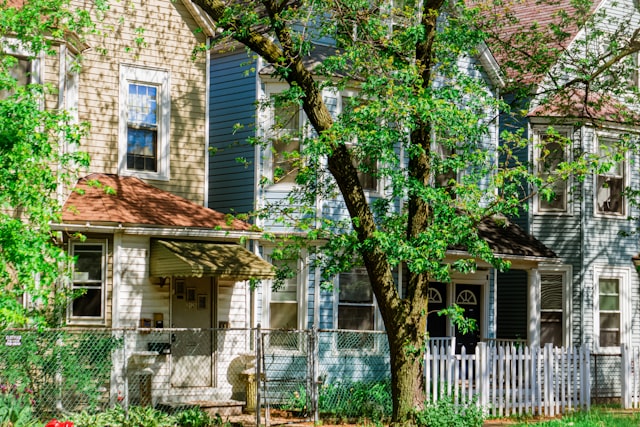
Green Bay's housing stock reflects its history as a manufacturing and meatpacking hub — dense construction from the early to mid-20th century dominates the Downtown Green Bay and older Allouez corridors. These homes were built for function, not longevity, and many carry original wiring, galvanized supply lines that are past their service life, and basement drainage issues that are endemic to the Fox River floodplain areas. De Pere and Howard, on the southern and western edges, have newer construction that holds up better, but the city's core stock is aging. Wisconsin winters accelerate exterior deterioration — roofs, siding, and masonry all take hard seasonal abuse. FHA and conventional appraisers regularly flag these issues, and sellers who can't fund repairs before listing find their buyer pool limited to cash buyers and renovation investors regardless.
Why Neighborhoods Matter More Than Citywide Averages
Green Bay's $218,000 average masks meaningful variation across its neighborhoods. Ashwaubenon is an incorporated village adjacent to Green Bay that works as its own suburban market, with newer commercial development and suburban housing stock. In Allouez and De Pere, sales with conventional financing tend to close cleanly. Suamico and Howard on the outer ring have newer suburban growth where buyers have more options and sellers have more negotiating room. Downtown Green Bay has older, denser housing where condition issues are common, so homes there are compared with other older homes, not with Suamico listings.
What You Actually Save by Skipping the Traditional Route
On a $218,000 Green Bay home, traditional sale costs add up fast. Agent commissions at 6% total $13,080. Buyer closing cost assistance of 2–3% adds $4,360–$6,540. On an older Downtown Green Bay or Allouez property, inspection repair requests for items like electrical upgrades, roof work, or plumbing replacements commonly reach $8,000–$18,000. Holding costs during a 60–90 day listing and closing period — mortgage, $336/month in taxes, heat, insurance — add $3,000–$4,500. Wisconsin's real estate transfer fee on a $218,000 sale adds $654. Total friction: $29,094–$42,774. A cash sale with no contingencies can deliver net proceeds close to the traditional route, with none of the repair negotiations or financing fall-through risk that plagues older Green Bay properties.
