Local Property Taxes and the Pressure They Create
Greenville County operates under South Carolina's statewide effective rate of 0.57%, ranking 46th nationally — among the most affordable tax environments in the country. On a $295,000 home, annual taxes run roughly $1,680. The low rate is partly offset by Greenville's rapid appreciation over the past decade, which has pushed assessed values upward even as the rate stayed flat. Homeowners who bought or inherited properties years ago can now face higher assessed values without the income growth to match. Greenville County holds its delinquent tax sale annually, and tax liens bought by investors accrue interest from the sale date.
How South Carolina Foreclosure Law Affects Your Options
Greenville County falls under South Carolina's judicial foreclosure system, which requires a circuit court proceeding before any sale can take place. The Master in Equity for Greenville County oversees these cases, and the full timeline from filing to courthouse auction runs 6 to 9 months. Greenville's busy court docket — driven by the county's strong population growth — has historically stretched that timeline toward the longer end. South Carolina provides no right of redemption after the court confirms the sale. Homeowners who wait for the process to play out fully lose the ability to sell, refinance, or negotiate — options that disappear once a sale is confirmed.
Greenville's Housing Stock and the Inspection Problem
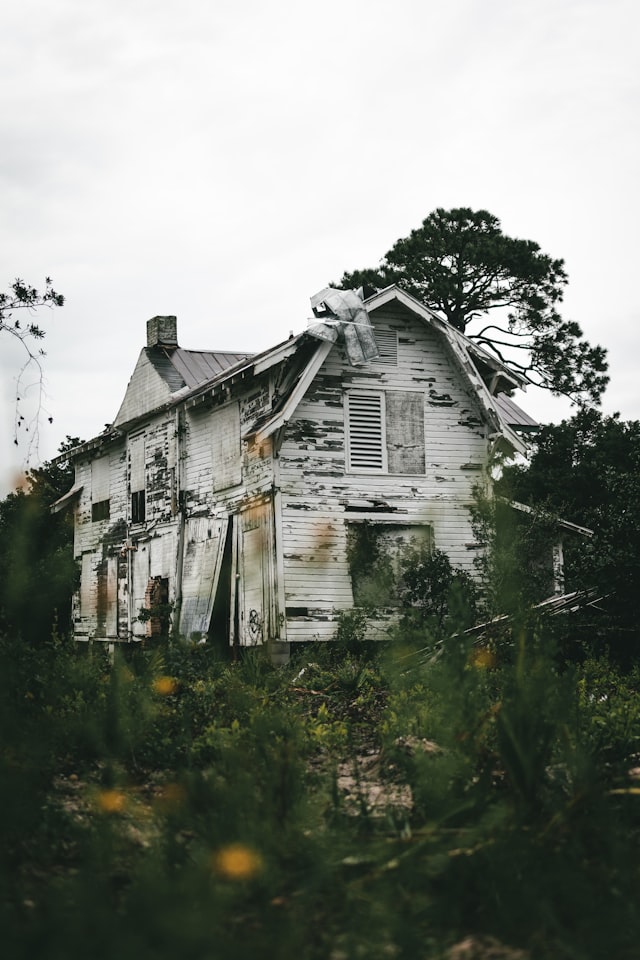
Greenville's industrial heritage left a housing stock that reflects its mill town roots. Neighborhoods like Parker, Judson, and Sans Souci were built to house textile mill workers — small, dense homes with original construction dating to the 1930s through 1960s. These properties commonly have crawl space moisture issues driven by the Upstate's heavy rainfall, original single-pane windows, and outdated electrical panels that predate modern load requirements. In Welcome and Taylors, post-war ranch homes on larger lots carry different issues: septic systems, well water, and rural-to-suburban transition problems that complicate appraisals for conventional buyers. Properties requiring FHA-minimum-condition repairs consistently fail to close when listed traditionally.
Why Neighborhoods Matter More Than Citywide Averages
Greenville's $295,000 average covers a wide range. Near downtown, Nicholtown has seen fast price changes that make pricing uncertain for sellers. Parker and Judson, west of downtown, carry values 30 to 40 percent below the city average. Greer and Taylors, in the northern county, work more like suburban bedroom communities. Sans Souci sits along the Reedy River corridor, where old industrial zoning left mixed residential pockets with difficult comparables.
What You Actually Save by Skipping the Traditional Route
On Greenville's $295,000 median home, a traditional sale burns through equity quickly. Six percent in agent commissions costs $17,700. South Carolina's required attorney closing adds $1,500 to $2,500, and the deed recording fee ($1.85 per $500) runs $1,091 on a $295,000 sale. Repairs to bring a 1950s mill-era home to listing condition — electrical updates, crawl space encapsulation, window replacement — easily reach $20,000 to $35,000. Add two to three months of carrying costs at roughly $2,000 per month and you've spent $50,000 to close a deal on a $295,000 home. A cash buyer takes the property as-is, can close quickly, and eliminates most of those costs — often delivering a net result that equals or beats the traditional route.
