Local Property Taxes and the Pressure They Create
Providence County has the highest effective property tax rates in Rhode Island, and the City of Providence itself runs the highest mil rate in the state — often cited at 24–26 mills, which translates to effective rates that hit 2.5–3% on many residential assessments. On a $335,000 Providence home — the city average — a homeowner can pay $8,000–$10,000 per year in property taxes. That burden is especially acute for owners whose tax bills have grown faster than their incomes as assessed values rose. Providence runs its own tax sale program, and liens sold to third-party investors accrue interest at 10% per year — meaning a homeowner who falls one year behind can face a rapidly compounding debt separate from their mortgage.
How Rhode Island Foreclosure Law Affects Your Options
Rhode Island allows non-judicial foreclosure by power of sale, giving lenders the ability to complete the process in just 2 to 4 months without court approval. In Providence, that timeline is real — lenders publish the required three-week notice in a local newspaper and proceed to sale without judicial oversight. There is no statutory redemption period after the sale. For Providence homeowners, the 2-to-4-month window is genuinely short. A homeowner who receives an acceleration notice and decides to "wait and see" may find the auction scheduled before they've had a chance to explore alternatives. Acting within the first 30 days of receiving a default notice is the difference between having options and having none.
Providence's Housing Stock and the Inspection Problem
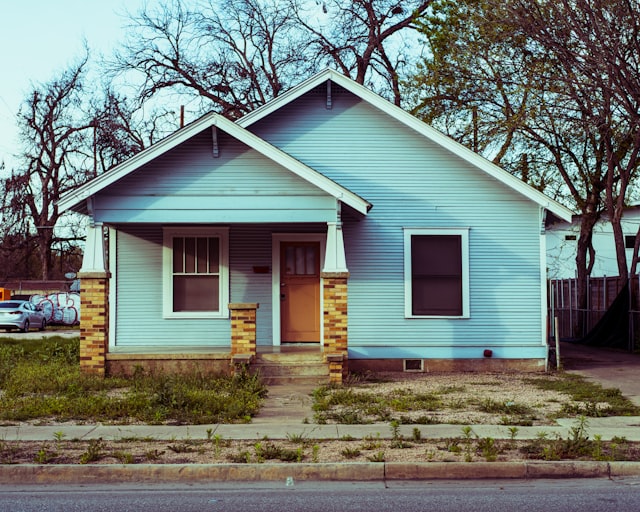
Providence's housing stock is dominated by triple-deckers — three-story wood-frame multifamily homes built between 1890 and 1930 that are the architectural backbone of South Providence, West End, and Olneyville. These buildings have a specific set of inspection challenges: balloon framing that lacks modern fire blocking, knob-and-tube wiring in the walls and ceilings, lead paint on all pre-1978 surfaces (which Providence has in abundance), and older plumbing that combines cast iron mains with galvanized branch lines. Smith Hill and Wanskuck have more single-family bungalows from the 1920s–1940s in similar condition. Hope neighborhood properties near Brown University command higher prices but still carry the same vintage inspection issues. FHA and VA financing on pre-1978 properties triggers mandatory lead paint protocols that can delay or kill a traditional sale.
Why Neighborhoods Matter More Than Citywide Averages
Providence prices vary sharply by neighborhood. The Hope and Charles neighborhoods near the East Side draw a strong buyer pool and see competitive offer situations. In Elmwood, some streets now command $400,000+ while others remain below $200,000. Olneyville and the West End attract a mix of investors and owner-occupants, and triple-deckers in poor condition are harder to finance. Smith Hill's proximity to the State House has driven some appreciation, while Wanskuck remains a more affordable, slower-moving market.
What You Actually Save by Skipping the Traditional Route
On a $335,000 Providence home, a full 6% agent commission (Clever's Rhode Island average is 5.6%) is $20,100. Rhode Island's seller-paid conveyance tax at $3.75 per $500 adds roughly $2,513. Closing costs of 2–3% run $6,700–$10,050. An attorney is required at closing (~$1,200–$2,000). Inspection repair credits on a triple-decker with lead paint and aging systems routinely run $10,000–$25,000. A traditional sale at $335,000 can net $270,000–$290,000 after all costs. A cash buyer at $295,000–$305,000 as-is, closing in two weeks, can beat that outcome and eliminates the risk of a financed buyer's mortgage falling through on a property with lead paint disclosure requirements. In Providence's complex older housing market, as-is cash certainty is worth every dollar of the difference.
