Local Property Taxes and the Pressure They Create
Bend sits in Deschutes County, where Oregon's 0.97% effective tax rate applies to a market that has become one of the most expensive in the Pacific Northwest. At Bend's average home price of $680,000, annual property taxes run approximately $6,600 — over $550 a month. Deschutes County has seen its assessed value base grow rapidly with in-migration from California and the Bay Area, and local bond measures for infrastructure and school expansion have pushed effective rates in some areas slightly above the statewide baseline. For a homeowner carrying a large mortgage on a $680,000 property, the combined monthly obligations often exceed $4,500 — a figure that creates serious cash flow stress during any income disruption.
How Oregon Foreclosure Law Affects Your Options
Oregon's 5 to 8 month foreclosure timeline applies in Deschutes County, with lenders typically pursuing non-judicial trustee sales. There is no redemption period after a trustee sale, which means once the auction closes, the former owner walks away with nothing beyond whatever surplus exists above the loan balance — and often there's none. Oregon trustee sales carry no redemption afterward (ORS 86.797). A direct pre-foreclosure sale lets you negotiate the terms, choose your buyer, and close on your schedule rather than a trustee's.
Bend's Housing Stock and the Inspection Problem
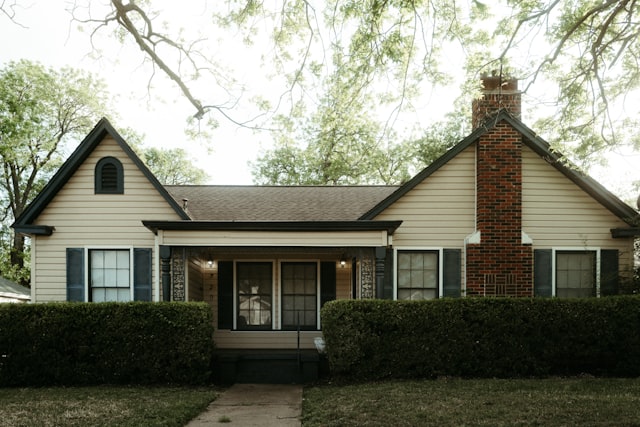
Bend's housing stock splits sharply between older inventory near the city core and newer construction in planned subdivisions on the east side and in areas like Northwest Crossing and Three Rivers. The older homes — particularly in River West and near Downtown Bend — were often built during Bend's 1970s and 1980s growth period and come with dated mechanical systems, single-pane windows, and heating systems originally designed for cheaper natural gas. The area's high desert climate (cold winters, hot summers, low humidity) creates its own set of wear patterns: stucco cracking, wood rot around window flashing, and HVAC systems that cycle hard year-round. Newer homes in subdivisions often have HOA complications that delay financing.
Why Neighborhoods Matter More Than Citywide Averages
Bend's highest-priced addresses, Broken Top, Awbrey Butte, and the Old Mill District corridor, attract out-of-state buyers with cash or large down payments, but those buyers are also the most demanding about condition. East Bend has grown rapidly with workforce housing and more accessible price points, but it also has the highest concentration of investor-owned rentals and slower appreciation. Northwest Crossing is a newer planned community where HOA rules and CC&R restrictions add complexity to any sale. River West, just west of downtown, has the city's oldest homes and the most inspection risk — buyers there routinely receive reports with $20,000 to $50,000 in deferred maintenance.
What You Actually Save by Skipping the Traditional Route
On Bend's $680,000 average home, the numbers get significant fast. A 6% agent commission is $40,800. Seller closing costs at 2-3% add another $13,600 to $20,400. Repairs and staging on an older Deschutes County home often run $15,000 to $35,000 to satisfy retail buyer expectations at this price point. Carrying costs on a $680,000 home — mortgage, taxes, insurance, utilities — run $5,000 to $6,000 per month during a 2 to 3 month listing period. Combined, the true cost of a traditional Bend sale can reach $90,000 to $120,000. A cash buyer willing to close in two weeks eliminates nearly all of that overhead, even if the offer comes in below list price.
