Local Property Taxes and the Pressure They Create
Eugene is in Lane County, where Oregon's 0.97% effective property tax rate applies to a market that has appreciated sharply since 2020. At Eugene's average home price of $395,000, annual property taxes land around $3,830 — roughly $319 per month. Lane County layered additional local option levies onto the base rate in recent years for school district funding, so actual bills often run slightly higher than the statewide average suggests. Delinquent taxes in Lane County accrue at over 16% annually in interest and penalties, and the county has become more aggressive in pursuing delinquency proceedings as budget pressures have grown. Falling behind on property taxes while also behind on a mortgage is a compounding problem with no good slow solution.
How Oregon Foreclosure Law Affects Your Options
Oregon's dual foreclosure system — judicial and non-judicial — means lenders pick the faster route, which in Lane County is almost always the non-judicial trustee sale. The process runs 5 to 8 months total, but that timeline includes a mandatory cure period where the loan can technically be reinstated. After a trustee sale, there is no redemption period — the new buyer takes clear title and you have no recourse. Oregon trustee sales carry no redemption afterward (ORS 86.797), so a sale to a buyer you choose has to close before the trustee's sale date.
Eugene's Housing Stock and the Inspection Problem
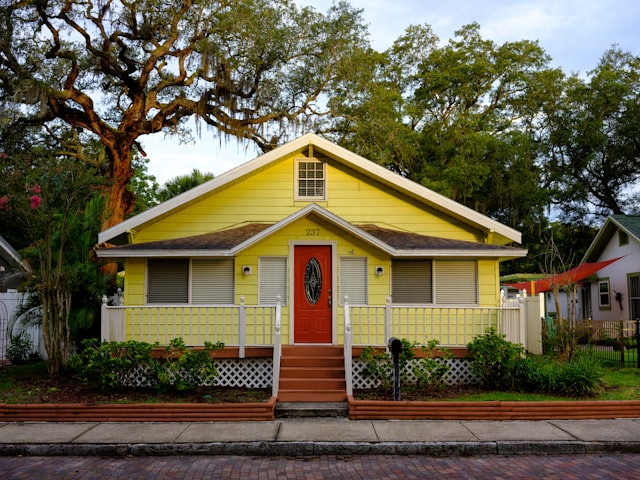
Eugene's housing stock is a mix of mid-century ranches, 1970s and 1980s construction, and a smaller supply of older Victorian and craftsman homes near downtown and the Whiteaker neighborhood. The mid-century and 1970s-era homes dominate neighborhoods like River Road, Churchill, and Cal Young — and they come with recurring inspection issues: original aluminum wiring that requires pigtailing for insurance compliance, aging composition roofs, and slab foundations that don't drain well in the Willamette Valley's wet winters. River Road properties in particular deal with periodic flooding concerns that affect insurability. Buyers using conventional financing frequently request credits or repairs that slow closings by weeks.
Why Neighborhoods Matter More Than Citywide Averages
The Whiteaker neighborhood has a concentration of older, smaller homes with deferred maintenance — buyers there are often investors or flippers who price in work. Downtown Eugene and the areas near the University of Oregon (Amazon, Fairmount) attract a different buyer profile, mostly landlords buying near campus. Cal Young in the northeast is a suburban corridor, but homes there compete heavily with new construction coming into Springfield. South Hills properties command premiums for views but face access and utility cost issues that reduce the pool of qualified buyers during slower markets.
What You Actually Save by Skipping the Traditional Route
On a $395,000 Eugene home, traditional sale costs hit quickly. A 6% commission is $23,700. Seller closing costs add $7,900 to $11,850 more. Pre-listing repairs on an older Lane County home — roof, electrical, or drainage work — routinely run $8,000 to $20,000 depending on what the inspector finds. At two to three months of carrying costs (mortgage, Lane County property taxes, insurance, utilities) at around $2,800 to $3,200 per month, the holding cost alone adds $5,600 to $9,600 before a single day of negotiation. Total traditional sale cost: $45,000 to $65,000 on a $395,000 home. A cash buyer who closes in two weeks eliminates almost all of that.
