Local Property Taxes and the Pressure They Create
Knox County's effective property tax rate sits close to Tennessee's 0.71% statewide average, with the combined county and city of Knoxville levy applied to assessed values that have risen substantially as the market appreciated over the past five years. On a $285,000 home — Knoxville's current average — annual taxes run roughly $2,000 to $2,300. Knox County reassesses property values on a four-year cycle, and the most recent reassessment captured significant appreciation in older in-town neighborhoods like Lonsdale, Mechanicsville, and Oakwood-Lincoln Park. Owners who've held these properties for decades are now paying materially more in taxes than they were four years ago, creating pressure that compounds with any other financial strain.
How Tennessee Foreclosure Law Affects Your Options
Knox County lenders operate under Tennessee's non-judicial foreclosure system, which requires no court approval to complete a trustee sale. From the first formal default notice, the process runs 2 to 3 months to a completed auction. The trustee publishes notice in a Knoxville-area newspaper for the required statutory period and then conducts the sale. Almost every Tennessee deed of trust waives the redemption right, so in practice there is none after the trustee sale closes. The University of Tennessee's presence in Knoxville means a portion of the city's distressed inventory involves properties that served as rental housing — landlords who over-extended, inherited properties that became rentals by default, and owner-occupants who moved for work and couldn't sell in time. All of these situations arrive at the same 2 to 3 month clock once a lender acts.
Knoxville's Housing Stock and the Inspection Problem
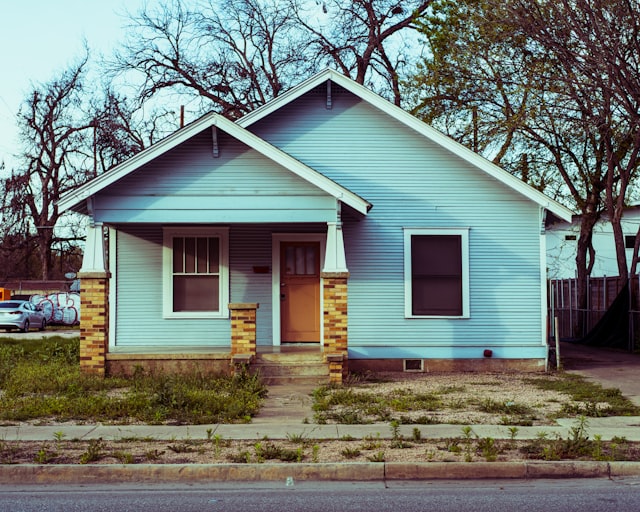
Knoxville's older neighborhoods carry the character of an Appalachian foothills city — lots with significant grade changes, homes built into hillsides, and construction dating from the 1920s through 1960s in the inner neighborhoods. Mechanicsville, Five Points, and Lonsdale contain small frame homes on hillside lots where drainage and foundation stability are recurring issues. Basement flooding is common in low-lying portions of these neighborhoods, particularly during the spring rain season when the Tennessee River watershed sees elevated flow. Burlington and Norwood sit slightly farther from downtown with more postwar ranch stock — better bones generally, but still carrying HVAC, electrical, and plumbing ages that flag during inspection. Oakwood-Lincoln Park has seen investor activity, but many properties still need significant work to attract financed buyers.
Why Neighborhoods Matter More Than Citywide Averages
Knoxville's $285,000 average reflects the city's growing appeal as a secondary market, but the neighborhoods diverge sharply. Fountain City, on the north side, sees consistent values near the city average. Powell, farther north in the county, is a suburban growth area with newer stock that competes on condition. In Mechanicsville and Five Points, closest to downtown, unrenovated properties sell at deep discounts while renovated ones achieve premium prices. Lonsdale, near the western side of the university area, carries values below the city average with many rental conversions. In Norwood, condition drives value more than location.
What You Actually Save by Skipping the Traditional Route
On a $285,000 Knoxville home, traditional sale economics consume a substantial share of equity. Six percent in agent commissions costs $17,100. Tennessee's transfer tax adds $1,054. Standard seller-side closing costs add $3,000 to $5,000. For older in-town properties in Lonsdale, Mechanicsville, or Burlington, pre-listing repairs — foundation drainage, HVAC replacement, electrical panel upgrades — can run $15,000 to $30,000 before the home is in condition to attract a financed buyer. Add 60 to 90 days of carrying costs at $1,800 per month and the total friction reaches $43,000 to $60,000 on a $285,000 home. A cash buyer eliminates the repairs, the agent, the transfer tax negotiation, and the timeline, with a clear net to the seller.
