Local Property Taxes and the Pressure They Create
Oklahoma City sits primarily in Oklahoma County, where the state's 0.90% effective property tax rate applies. On the city's average home price of $225,000, that's roughly $2,025 per year in property taxes. Oklahoma County assesses and collects taxes annually, and delinquent accounts accumulate statutory interest and penalties quickly. After two years of nonpayment, the county treasurer can list the property for resale at a public auction. Oklahoma City's oil-dependent economy means income volatility is real — the 2015 to 2016 oil bust created a wave of distressed properties across the metro that took years to absorb. A similar pattern plays out any time energy sector layoffs ripple through the city's employment base, leaving homeowners with mortgages they bought at oil-boom salaries suddenly trying to service on reduced income.
How Oklahoma Foreclosure Law Affects Your Options
Oklahoma allows both judicial and non-judicial foreclosure, and lenders in Oklahoma County can choose the faster power-of-sale process. Non-judicial foreclosure still requires newspaper publication for four consecutive weeks before the sale — a public notice that runs in the county's legal newspaper and creates a public record of the homeowner's financial distress. The full timeline runs 4 to 10 months depending on the route chosen and any delays. There is no redemption period after a completed Oklahoma foreclosure — once the sale happens, the former owner has no right to reclaim the property. For sellers in Oklahoma City who are behind on payments, the newspaper publication requirement is often the factor that motivates a private sale — nobody wants their financial situation announced in the county legal journal for four consecutive weeks.
Oklahoma City's Housing Stock and the Inspection Problem
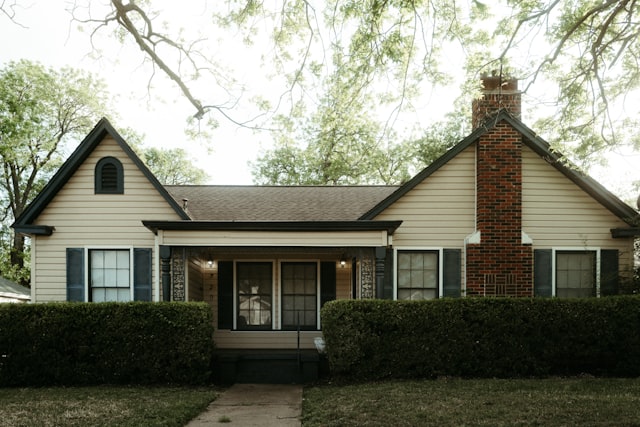
Oklahoma City's older housing stock includes a significant share of homes in the Eastside, Capitol Hill, and surrounding areas built between the 1940s and 1970s. These homes feature pier-and-beam or slab foundations that have moved with Oklahoma's expansive clay soils over decades — foundation repair is one of the most common and expensive issues in the metro, with serious repairs running $8,000 to $30,000 depending on severity. Oklahoma is also tornado alley, and homes without storm shelters often show signs of partial repairs after weather events — mismatched roofing sections, repaired siding, and window replacements that don't quite match the original profile. Traditional buyers with FHA financing face an appraiser who looks closely at foundation condition and roof integrity — both of which are frequently problematic in older OKC inventory.
Why Neighborhoods Matter More Than Citywide Averages
Oklahoma City spans a huge geographic footprint, and the $225,000 average covers wildly different submarkets. The Eastside and Capitol Hill, close to downtown, have homes priced well below the city average and a buyer pool that skews toward investors and buyers using down payment assistance programs. Putnam City and Del City are older suburbs where buyers often use conventional financing, are inspection-sensitive, and expect move-in ready condition. Classen-Ten-Penn is an older inner-city neighborhood with genuine character. Warr Acres, an independent city surrounded by OKC, has its own government and tax rates and attracts buyers who want a suburb at lower prices. Bricktown is commercial-residential mixed use and attracts a very specific condo buyer, not the typical distressed seller.
What You Actually Save by Skipping the Traditional Route
On a $225,000 Oklahoma City home, the cost of a traditional sale is disproportionately large relative to the price point. Agent commissions at 6% run $13,500. Seller-side closing costs of 2 to 3% add $4,500 to $6,750. Oklahoma's documentary stamp tax adds another $338 on the seller's side. Pre-listing repairs on an older OKC home — foundation work, roof repair, cosmetic updates — realistically run $10,000 to $20,000, and foundation issues can push that much higher. Monthly carrying costs run $1,500 to $2,000 during a 45-to-60-day listing period. The total cost of the traditional route easily reaches $35,000 to $45,000, which is 15 to 20% of the home's value. A cash buyer who takes the property as-is and closes in two weeks can put about the same money in the seller's pocket without the uncertainty.
