Local Property Taxes and the Pressure They Create
Chatham County applies Georgia's effective rate of 0.92%, ranking 24th in the country. On a $295,000 Savannah home, annual property taxes run approximately $2,714. Savannah's tourism economy and port activity have kept the city economically active. Chatham County's homestead exemption helps primary residents, but inherited properties — which are common in older Savannah neighborhoods like Cuyler-Brownville and Carver Village — lose that protection and face full market-rate assessment on properties that may not have been refinanced or updated in decades.
How Georgia Foreclosure Law Affects Your Options
Chatham County homeowners facing default fall under Georgia's non-judicial foreclosure system. Lenders advertise in the county's designated legal organ for four consecutive weeks and then sell at the first-Tuesday courthouse steps auction — a process that runs 2 to 3 months from start to finish. There is no redemption period after the sale in Georgia. Savannah's foreclosure auctions happen at the Chatham County Courthouse in downtown, and they are public events where third-party investors actively bid. Once the sale concludes, the prior owner's claim is extinguished immediately. For Savannah homeowners, the combination of speed and finality makes early action critical.
Savannah's Housing Stock and the Inspection Problem
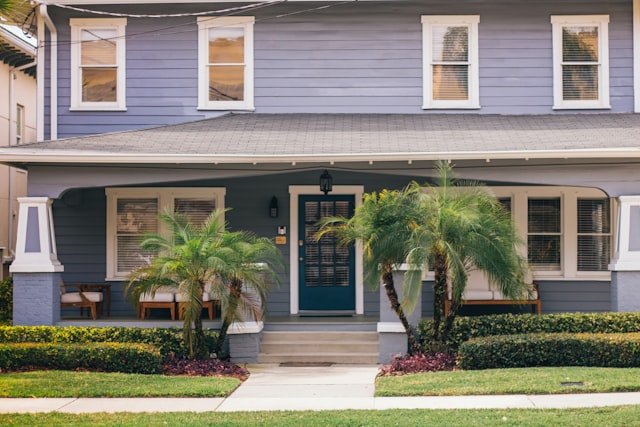
Savannah has one of the most significant concentrations of antebellum and Victorian-era architecture in the South, and that historical character comes with serious inspection liabilities. The city's designated historic district homes face restrictions on exterior modifications, which can complicate even routine repairs. Outside the tourist-facing historic core, neighborhoods like Cloverdale, Cuyler-Brownville, Frogtown, and Carver Village carry residential stock from the early to mid-twentieth century. Savannah's coastal climate — high humidity, salt air intrusion, subtropical heat — accelerates wood rot, exterior paint failure, and moisture damage in pier-and-beam foundations. Many of these homes have never had proper moisture barriers installed, and crawl space conditions are a near-universal inspection finding.
Why Neighborhoods Matter More Than Citywide Averages
Savannah's $295,000 average reflects strong demand from tourism, remote workers, and investors drawn to the city's character, but that demand concentrates in the historic district, Thomas Square, and Ardsley Park. Cuyler-Brownville and Cloverdale sit next to downtown. Carver Village and Frogtown sit further out with more modest values and more deferred maintenance. Eastside is a mixed neighborhood with proximity to commercial corridors. Midtown Savannah, despite its name, has values closer to the city's middle market than the historic core.
What You Actually Save by Skipping the Traditional Route
On a $295,000 Savannah home, the traditional route generates real friction. Six percent agent commission totals $17,700. Closing costs at 2% to 3% add $5,900 to $8,850. Georgia's transfer tax at $1.00 per $1,000 adds $295. Attorney closing fees in Savannah typically run $600 to $900. Pre-sale repairs on a Cuyler-Brownville or Cloverdale home — crawl space remediation, wood rot repair, roof, electrical — can run $12,000 to $25,000 given Savannah's humidity-accelerated deterioration. Carrying costs at roughly $1,900 per month for three months adds $5,700. Total friction on a distressed Savannah property easily reaches $42,000 to $58,000 below list. A cash close in two to three weeks sidesteps every one of those costs.
