Local Property Taxes and the Pressure They Create
Spokane is in Spokane County on the eastern side of Washington state, where the 1.03% effective property tax rate applies to homes averaging just $310,000 — among the most affordable in the state. Annual taxes on that average home run roughly $3,193 — about $266 per month. Spokane County's levy structure includes city, county, school district, library, and emergency management levies that collectively make up the effective rate. Because home values are lower here than in western Washington, the dollar amounts are more manageable — but Spokane's economy, historically tied to healthcare, education, and light manufacturing, produces more income volatility than the tech-heavy western corridor. That combination of moderate home prices and income uncertainty makes foreclosure filings in Spokane County a consistent part of the county's public record.
How Washington Foreclosure Law Affects Your Options
Washington's non-judicial foreclosure process runs the same 4 to 5 month timeline in Spokane County as it does statewide. Lenders proceed under the Deed of Trust Act without court involvement, and there is no redemption period after the trustee sale. Spokane County trustee sales are advertised in local legal publications and conducted publicly. One important note for Spokane sellers: Washington's REET on a $310,000 sale sits at the 1.1% tier — approximately $3,410 — which is far lower than what Seattle-area sellers face, but it's still a seller-paid obligation that reduces net proceeds. A pre-foreclosure cash sale sidesteps the auction entirely and lets you control the disposition.
Spokane's Housing Stock and the Inspection Problem
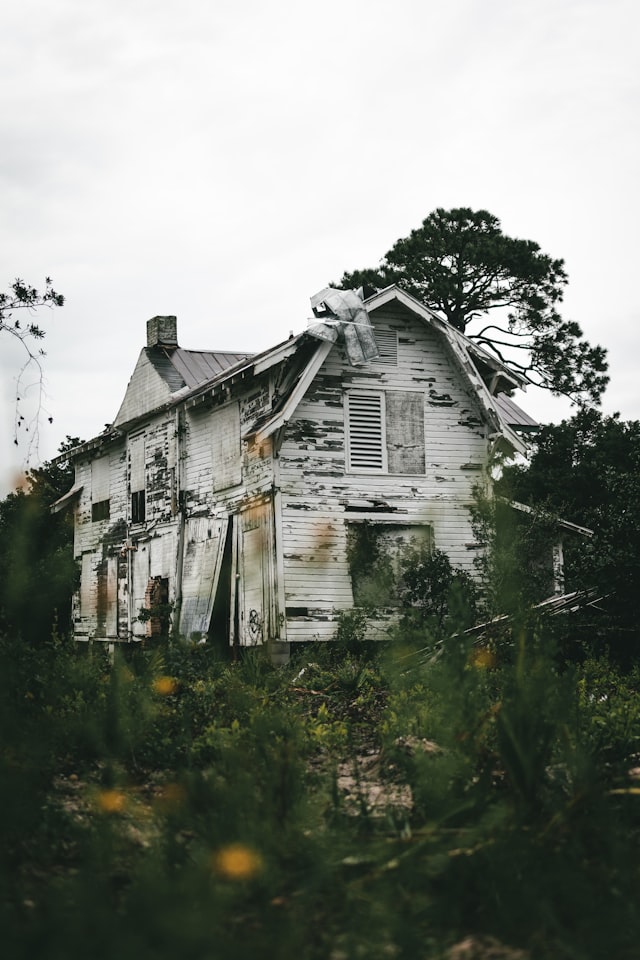
Spokane's housing stock reflects a city that grew rapidly in the late 19th and early 20th century and then more modestly since. East Central, Hillyard, and West Central are among the oldest neighborhoods, with housing from the 1890s to 1930s that presents the full range of century-old construction challenges: galvanized supply lines scaled with mineral deposits, original electrical systems, plaster walls with moisture damage, and basement or crawl space issues related to Spokane's clay-heavy soils. Spokane's cold winters (-10°F to -20°F at the extreme) accelerate mechanical wear — heating systems, pipes, and roofing take harder hits here than in milder climates. Peaceful Valley, tucked along the Spokane River, deals with flood plain concerns that affect both insurance costs and lender willingness to finance.
Why Neighborhoods Matter More Than Citywide Averages
In East Central and West Central, vacancy is higher and many buyers are investors who price accordingly. In Hillyard, days on market run long. On the South Hill, newer construction sets higher expectations, so condition issues stand out sharply against well-maintained comps. Gonzaga and Logan sit near Gonzaga University and have many rental properties, so competition from other landlords can suppress pricing. In Shadle Park on the northwest side, more buyers rely on financed offers and inspection contingencies.
What You Actually Save by Skipping the Traditional Route
On Spokane's $310,000 average home, traditional sale costs are smaller in absolute terms but equally painful relative to available equity. Agent commissions at 6% are $18,600. Washington REET at 1.1% adds $3,410. Seller closing costs add another $6,200 to $9,300. Pre-listing repairs on Spokane's older housing stock — roof replacement, plumbing updates, or furnace replacement — commonly run $8,000 to $20,000. Two to three months of carrying costs at $2,200 to $2,700 per month adds $4,400 to $8,100. Total overhead on a traditional Spokane sale: $40,000 to $59,000 on a $310,000 home. On a property with limited equity, that math often means the seller nets very little — or nothing — through the traditional route.
