Local Property Taxes and the Pressure They Create
Cleveland sits in Cuyahoga County, which has one of the highest effective property tax rates in Ohio — routinely exceeding 2% in many areas, well above the state's 1.56% average. Cuyahoga County's tax structure reflects decades of school levy additions, and homeowners in Cleveland city limits often pay effective rates of 2.2% to 2.8% depending on their school district. On Cleveland's $115,000 median home price, even at 2.5% that's $2,875 per year — a high burden relative to home value compared to almost any other major city in the country. Cuyahoga County has faced criticism for assessment inequities, with studies showing lower-value homes being over-assessed relative to higher-value properties. For a homeowner at $115,000, falling behind on property taxes means a lien that compounds quickly, and Cuyahoga County has an active tax foreclosure program that has taken thousands of properties over the past decade.
How Ohio Foreclosure Law Affects Your Options
Ohio's judicial foreclosure process runs through Cuyahoga County Common Pleas Court — one of the highest-volume foreclosure courts in the state — and the timeline stretches 7 to 14 months from filing to sheriff sale. The court backlog in Cuyahoga County has historically been severe, and timelines there often run toward the longer end of that range. After an Ohio sheriff sale, you can redeem only until the court confirms the sale, and only by paying the full judgment, costs and interest. Once confirmed by the court, the transaction is final and the former owner has no legal recourse to reclaim the property. In Cleveland, where distressed property sales have been common for decades, the Cuyahoga County Land Bank is also an active player — it takes title to vacant and tax-delinquent properties and either rehabilitates or demolishes them. For a homeowner in default, the choice is sell now under your own terms or eventually lose the property to either the lender or the county.
Cleveland's Housing Stock and the Inspection Problem
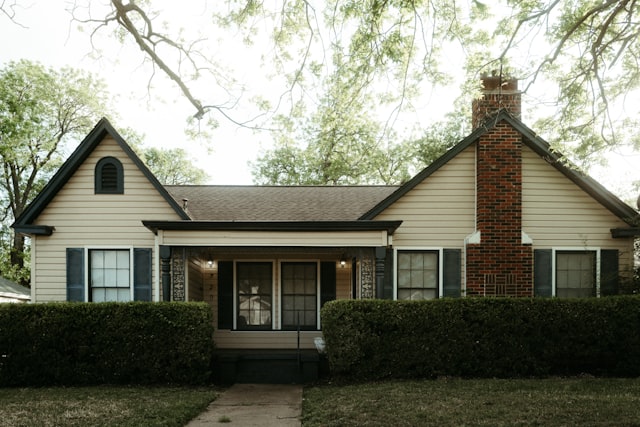
Cleveland's residential stock is almost entirely early 20th century construction — two-family doubles, brick bungalows, and wood-frame Cape Cods built between 1900 and 1950 dominate neighborhoods like Glenville, Hough, Slavic Village, and Collinwood. These homes are structurally solid when maintained but carry persistent issues: knob-and-tube wiring that insurance companies increasingly refuse to cover, lead-based paint and lead service lines (Cleveland had among the highest childhood lead exposure rates in the nation as recently as 2015), and basement moisture issues tied to aging sewer infrastructure and clay tile drain tiles that have deteriorated over decades. Clark-Fulton and Garfield Heights have similar housing with similar age-related issues. Many of these properties have cycled through rental use repeatedly, and the deferred maintenance from extended rental periods is visible in mechanical systems, flooring, and building envelopes. Retail buyers using FHA or conventional financing face strict appraisal requirements that these properties often can't meet without repairs first.
Why Neighborhoods Matter More Than Citywide Averages
Cleveland's $115,000 median is itself an average across enormous variation — from Tremont and Ohio City, where renovated properties sell at $250,000 to $350,000, to Hough and Glenville, where values for unrenovated properties sit well below $80,000. In Slavic Village and Collinwood, the buyer pool is mostly investors and owner-occupants willing to do their own work, and distressed properties rarely sell with retail financing. Clark-Fulton, on Cleveland's west side, and Garfield Heights, a separate suburb south of the city, have housing stock that reflects the area's industrial heritage, and buyers there price in renovation costs aggressively. Tremont and Ohio City attract retail buyers, but those buyers expect either renovated condition or a deep discount that accounts for renovation costs. The specific block and specific condition of the property determine whether any retail buyer will seriously engage.
What You Actually Save by Skipping the Traditional Route
On a $115,000 Cleveland home, the traditional sale math is stark. Six percent agent commissions take $6,900, and 2 to 3% in seller closing costs add $2,300 to $3,450. Cuyahoga County's conveyance fee adds another $460 to $575. That's $9,660 to $10,925 before any repairs — and on a $115,000 home, that's nearly 10% of the sale price. In Cleveland's aging housing stock, inspection findings aren't optional items — they're typically structural and mechanical issues that lenders require to be addressed before approving financing. Roof repairs, electrical updates, plumbing fixes, and lead remediation can easily run $15,000 to $30,000 on older Cuyahoga County homes. Carrying the property for 60 to 90 days adds another $2,000 to $3,500 in costs on a lower-priced home. A cash buyer who closes in two weeks and buys as-is frequently saves more than $20,000 compared to the retail path — on a $115,000 home, that difference is enormous.
