Local Property Taxes and the Pressure They Create
St. Louis operates as an independent city — not part of St. Louis County — which means it has its own tax rate, its own assessor, and its own fiscal pressures separate from the surrounding suburban county. The effective property tax rate in St. Louis City runs roughly 1.4% to 1.6%, significantly above Missouri's 0.97% statewide average. On a home priced at the city's $155,000 median, that's $2,170 to $2,480 per year. Where values are lower, the property tax bill as a percentage of home value is a real burden. The city has faced structural budget problems for years, and the assessment process has historically been contested by advocacy groups citing inconsistencies in how properties in different neighborhoods were valued.
How Missouri Foreclosure Law Affects Your Options
Missouri's non-judicial foreclosure law means a St. Louis homeowner in default can lose their property in as little as 2 to 3 months. There's no court hearing where you present your case — the trustee follows the statutory process, publishes notice, and the sale proceeds. The narrow redemption right that can follow (only if the lender buys and you gave written notice before the sale) is real on paper, but for most homeowners in foreclosure, the ability to pay back the full debt plus interest within a year is rarely realistic. The practical window to act is before the auction. Selling directly for cash before the foreclosure sale is completed means you control the closing date, and the proceeds.
St. Louis's Housing Stock and the Inspection Problem
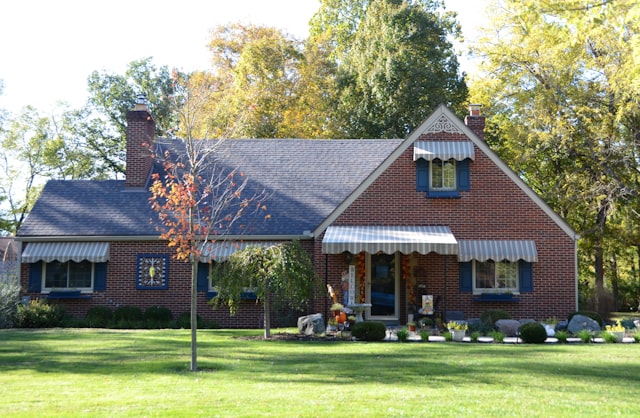
St. Louis is famous for its brick — the city's residential stock is dominated by brick row houses, two-flats, and bungalows, many built between 1900 and 1940. Brick construction holds up well structurally, but it creates its own set of problems: tuck-pointing deterioration, lintel cracking over windows and doors, and moisture infiltration behind deteriorating mortar. Many St. Louis homes also have full basements with stone or brick foundations that predate modern waterproofing standards. The city's older housing stock often has original cast-iron plumbing, single-pane windows, and knob-and-tube wiring that's been partially updated but not fully replaced — a combination that makes full inspections complicated and gives retail buyers' lenders reason to hesitate. Properties that have been rental-converted often carry deferred maintenance that accumulates fast.
Why Neighborhoods Matter More Than Citywide Averages
St. Louis's $155,000 average masks enormous variation across the city's distinct neighborhoods. In Benton Park, renovated homes sell well above the city average. Carondelet, along the Mississippi, has property values in the $120,000 to $160,000 range. In Old North St. Louis, Gravois Park and Dutchtown, condition determines value more than location. For a cash buyer, the specific block matters more than the zip code.
What You Actually Save by Skipping the Traditional Route
On a $155,000 St. Louis home, agent commissions at 6% cost $9,300. Seller-side closing costs of 2 to 3% add another $3,100 to $4,650. Together that's $12,400 to $13,950 — nearly 9% of the sale price before a single repair is addressed. In a city where homes frequently carry deferred maintenance items — tuck-pointing, roof wear, basement waterproofing, plumbing updates — a traditional buyer's inspection almost always surfaces $5,000 to $15,000 in repair requests. Add 60 to 90 days of holding costs at roughly $1,200 to $1,500 per month in mortgage, taxes, and utilities, and you're looking at $7,200 to $13,500 more in carrying costs. Run the real numbers: an as-is cash sale can leave you with more than a retail sale.
