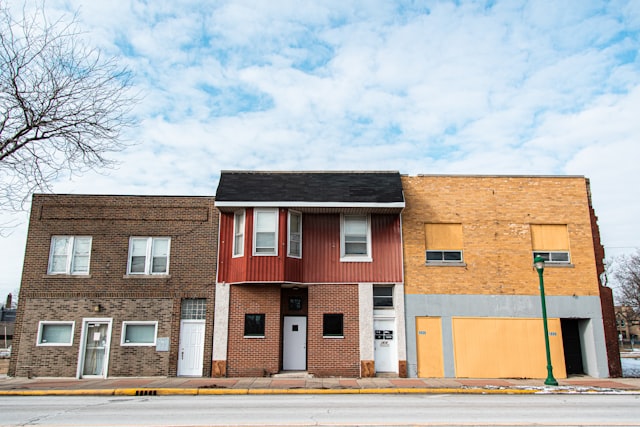
The highest tax bills in the country, on the cheapest houses
This is the part that shocks people who don't live down here: the south suburbs pay some of the highest effective property tax rates in America. Not Chicago, higher. In Harvey, Dolton, Riverdale, Markham, a $150,000 house can carry a $6,000 or $7,000 tax bill, because when the tax base shrinks, the rate climbs. So owners pay big-city taxes on small-town values. When something breaks, the furnace, the job, the marriage, that bill is usually the first thing that slips. Nobody should feel embarrassed about that. The math down here is genuinely stacked against you.
The tax sale is the real threat out here
In the south suburbs it's usually not the bank that takes houses. It's the tax sale. Fall a couple years behind in Cook County and your debt gets auctioned to investors who collect interest and can eventually take the deed. It catches inherited property especially hard: a paid-off house in Calumet City or South Holland with no mortgage at all can still go to a tax buyer the family never heard of. If you're behind, you have a redemption window, and a sale can clear the whole thing at closing. But the window closes on a schedule, not when you're ready.
Why the listing sits
Plenty of south suburban houses are solid brick ranches and capes from the 50s and 60s, good bones. The problem is the tax bill. Buyers run the numbers, see the taxes, and some move on. A buyer with a loan also needs the house to appraise and pass the lender's inspection. So listings sit. Sixty days, ninety days, a price cut, another one. Meanwhile you're paying that tax bill the whole time, which is exactly the thing you were trying to get out from under.
The street matters more than the town name
Even down here, the block matters: condition, the street, and what has sold nearby move the price more than the town name does. Buyers work every town in the south suburbs, from Harvey, Riverdale and Dolton to Lansing, South Holland, Markham, Hazel Crest and Blue Island, and a good offer reflects the actual house and street.
Both paths on a $165,000 house
The listing route on a $165,000 house: about $8,000 in commission at the Illinois average of 4.9%, a few thousand in buyer closing help, and four to six months of carrying those taxes, call it $1,500 or more just in tax money while you wait. That's roughly $12,000 to $15,000 before whatever the inspection shakes loose, if the deal closes at all. A cash sale often closes in 7 to 28 days once title is clear, the back taxes come out of the proceeds at closing, and you're done with the bill for good. For a lot of south suburban owners, that last part is the whole point.
Selling in one of the towns people search by name? Harvey, Dolton, and Calumet City each have their own page with that town's numbers, and the Chicago suburbs hub maps the whole metro county by county.
What the census says about the south suburbs
CMAP's June 2026 Community Data Snapshots, built on 2020 to 2024 American Community Survey estimates, show population and vacancy in three of these towns. Harvey has 20,230 people, 32.6 percent fewer than in 2000, and 2,345 of its homes, 23.8 percent, sit vacant, up from 11.5 percent in 2000. Calumet City has 35,100 people, down 10.2 percent since 2000, with 2,224 vacant units, 13.4 percent. Dolton has 20,825, down 18.7 percent, with 1,018 vacant units, 11.5 percent, against 7.7 percent for Cook County. Owners still hold most of Dolton (72.6 percent of occupied homes) but a thinner majority in Harvey (57.6 percent) and Calumet City (55.7 percent, down from 63.3 percent in 2000).
The houses are postwar. CMAP's median year built is 1960 in Harvey, 1965 in Dolton and 1966 in Calumet City, with 46.1 percent of Harvey's units, 60.9 percent of Dolton's and 45.8 percent of Calumet City's built from 1940 to 1969, the brick ranches and capes above. Almost nothing is new: 33 units in Harvey, 18 in Dolton and 99 in Calumet City were built in 2010 or later. Dolton is 80.1 percent single-family detached; Calumet City has more two-flats and three-to-four-unit buildings (6.7 and 7.9 percent). Median household income is $42,429 in Harvey, $57,887 in Dolton and $55,369 in Calumet City, against $83,498 for Cook County, and Dolton's is lower than its inflation-adjusted 2010 to 2014 figure of $61,196.
The 2023 reassessment, by the Treasurer's numbers
The Cook County Treasurer's analysis of tax year 2023 bills, the first after the south and southwest suburbs were reassessed, found the median homeowner's bill in the region rose 19.9 percent to $6,117, the largest increase for any reassessed area in at least 29 years. Residential taxes in the region rose $396.8 million (15.9 percent) while commercial taxes fell $121.6 million (7.8 percent): the reassessment shifted 4 percent of the region's burden from businesses onto homeowners. In 15 south suburbs the total billed to homeowners rose more than 30 percent, and in Dixmoor and Phoenix the median bill more than doubled. By town, the Treasurer's median homeowner bill and its one-year change:
- Dixmoor: $1,951, up 122.44 percent.
- Phoenix: $1,744, up 106.86 percent.
- Harvey: $2,518, up 82.18 percent.
- Markham: $4,095, up 72.20 percent.
- Calumet Park: $4,367, up 72.15 percent.
- Park Forest: $7,152, up 55.99 percent.
- Riverdale: $4,096, up 46.95 percent.
- Hazel Crest: $5,651, up 39.04 percent.
The same report lists the 19 highest composite tax rates in Cook County, all in the south suburbs: Ford Heights 29.16 percent, Phoenix 27.48, Riverdale 25.40, Park Forest 23.59, Harvey 22.20, Calumet City 20.75, Dolton 20.10, Markham 19.80, Hazel Crest 18.36, Lansing 15.69 and South Holland 15.56, against 7.03 percent in Chicago and 11.11 percent in River Grove, the highest north suburb. Park Forest's rate fell from 43.5 percent in 2022 to 23.6 percent in 2023 and its median homeowner bill still rose $2,567, because residential assessed values there jumped 86 percent. The Treasurer's own summary of the region is that for decades many homeowners here have paid more in property tax than on the mortgage.
The Civic Federation's August 2025 report on collection rates shows what happens next. Countywide, 95.1 percent of tax year 2023 bills were collected, nearly $1 billion short; the south suburbs averaged 92.0 percent, and the ten lowest municipalities in the county were all here: Ford Heights 31.4 percent, Robbins 50.1, Harvey 52.2, Phoenix 60.8, Riverdale 67.2, Dixmoor 73.7, Calumet Park 78.0, Chicago Heights 79.0 and Dolton 79.1. Unpaid bills are what the December sale is made of.
Foreclosure and investor buying, by DePaul's count
DePaul University's Institute for Housing Studies tracks each suburb. Foreclosure filings have climbed since 2021: in Dolton from 35 to 163 in 2025, in Calumet City from 38 to 172, in Harvey from 17 to 67. Of the completed auctions in 2025, the lender took the property in 85.7 percent of Dolton's 35, 89.3 percent of Calumet City's 28 and 91.7 percent of Harvey's 12. Since 2005, at least one foreclosure filing has hit 47.6 percent of Dolton's residential properties, 41.0 percent of Calumet City's and 35.3 percent of Harvey's. Business buyers made 39.9 percent of Dolton's 281 residential purchases in 2025, against 21.0 percent of Calumet City's 414 and 21.2 percent of Harvey's 226.
If you've been served, Illinois law gives you 90 days to reinstate by paying the arrears and costs (735 ILCS 5/15-1602) and a right to redeem until the later of seven months after service or three months after judgment (735 ILCS 5/15-1603), ending before the judicial sale. The Circuit Court of Cook County's Mortgage Foreclosure Mediation Program offers free counseling and legal help at (855) 452-2637. The Cook County foreclosure timeline walks through each stage.
The Cook County calendar
The Cook County Treasurer's due-dates page puts tax year 2025's installments on April 1 and October 1, 2026, and the next annual tax sale on December 15, 2026, for delinquent tax year 2023 taxes. Buyers at the sale purchase the debt, not the house, and for a home with one to six units Illinois law (35 ILCS 200/21-350, as amended by P.A. 104-553) generally allows three years from the sale to redeem; vacant non-farm property gets one year. The Cook County Clerk's office prepares an estimate of the cost of redemption. Tax debts nobody buys at the annual sale are forfeited to the county and can be sold later at the separate Scavenger Sale, often for less than what's owed. The back-taxes guide walks through it, and the Homeowner, Senior and Senior Freeze exemptions all depend on the owner living in the home, according to the Assessor, so an inherited house that sits empty loses them.
Village stamps and inspections, town by town
Every Cook County deed pays the county's $0.25 per $500 and the state's $1 per $1,000 through MyDec, per Chicago Title's transfer-tax chart for the Chicago metropolitan area as of July 1, 2026. On top of that, most south suburbs add a stamp, an inspection, or both. From the same chart:
- Calumet City: $8 per $1,000, split equally; water paid, inspection required, plat of survey, $50 exempt stamp.
- Dolton: $5 per $1,000, seller; water paid; $150 housing inspection fee before stamps issue; $10 fee even if exempt.
- Harvey: city transfer stamp required; sources differ on the rate and who pays (the Cook County Clerk lists $4 per $1,000 paid by the buyer, a 2026 title chart shows $5 per $1,000 split equally), so confirm with Harvey City Hall; a $60 administrative processing fee is charged to the buyer; water paid; copy of the deed; a charge for exempt stamps.
- Markham: a per-PIN fee ($50 on the city FAQ, $100 on its October 2024 form; the County Clerk lists the seller as liable) plus a $125 residential inspection ($200 commercial), required before any sale, rental or transfer of title.
- Riverdale: no transfer tax; a $200 inspection, the original deed and a paid water bill.
- Park Forest: $5 per $1,000, seller; inspection required; $15 for exemptions.
- Country Club Hills: $5 per $1,000, seller, $50 minimum; final water reading; no personal checks.
- Burnham: $5 per $1,000, paid by the buyer. Glenwood: $5 per $1,000, seller.
- Blue Island: no tax; vacant property must be registered; the final water reading requested a week before closing; a certificate, not a stamp.
- South Holland: no tax; a transfer certificate that takes the village three days. Lansing: a certificate confirming water, ambulance, property-maintenance charges and judgments are paid.
- Hazel Crest: the chart notes a 2023 village moratorium (ordinance 02-2023) on certificates or licenses that would let anyone other than owner-occupants occupy a single-family house.
- Matteson, Oak Forest, Posen ($150 to the seller), Robbins ($80), Sauk Village, Calumet Park ($100): no tax, but a village inspection on sale.
The chart is updated twice a year and says to confirm with the village. Any of these can hold up a closing for weeks if nobody orders the inspection early.
Straight answers from Fair Home Cash for south suburban sellers
My bill doubled in 2024. Is that a mistake? Probably not. The Treasurer's tax year 2023 analysis found median bills up 82 percent in Harvey and more than doubled in Dixmoor and Phoenix after the 2023 reassessment. Check your exemptions with the Assessor and your payment status with the Treasurer.
The village wants an inspection before I can sell. Can I sell as-is anyway? The inspection and the stamp are village rules, listed town by town above. A cash buyer can take the repair list; the paperwork still has to be done, and when Fair Home Cash buys we order it and pay the fees.
A tax buyer has my taxes. Do I still own the house? Yes, until the redemption period runs out. For a home with one to six units Illinois law generally allows three years from the sale to redeem. A sale of the house pays the redemption from the proceeds at closing.
Sources: CMAP Community Data Snapshot, Harvey (June 2026); CMAP, Dolton; CMAP, Calumet City; Cook County Treasurer, tax year 2023 bill analysis; Civic Federation, property tax collection rates in Cook County (Aug. 25, 2025); DePaul Institute for Housing Studies: Harvey, Dolton, Calumet City; 735 ILCS 5/15-1602; 735 ILCS 5/15-1603; Circuit Court of Cook County, foreclosure mediation; Cook County Treasurer, due dates and tax sale; 35 ILCS 200/21-350; Cook County Clerk, tax redemption; Cook County Treasurer, Scavenger Sale; Cook County Assessor, exemptions; Chicago Title, transfer taxes, Chicago metropolitan area (July 1, 2026)
