North Avenue to 31st Street
Wikipedia's article on the West Side gives North Avenue and 31st Street as the borders officials most often use, and names nine community areas: West Town, the Near West Side, the Lower West Side (Pilsen), Humboldt Park, East Garfield Park, West Garfield Park, North Lawndale, South Lawndale (Little Village) and Austin. Its three big parks, Humboldt Park, Garfield Park and Douglass Park, hold much of the city's boulevard system, and the Garfield Park Conservatory is one of the largest in the nation. This page also covers Belmont Cragin and Hermosa, just north of North Avenue. Several have their own pages: Austin, Garfield Park, North Lawndale, Humboldt Park, Little Village and Belmont Cragin.
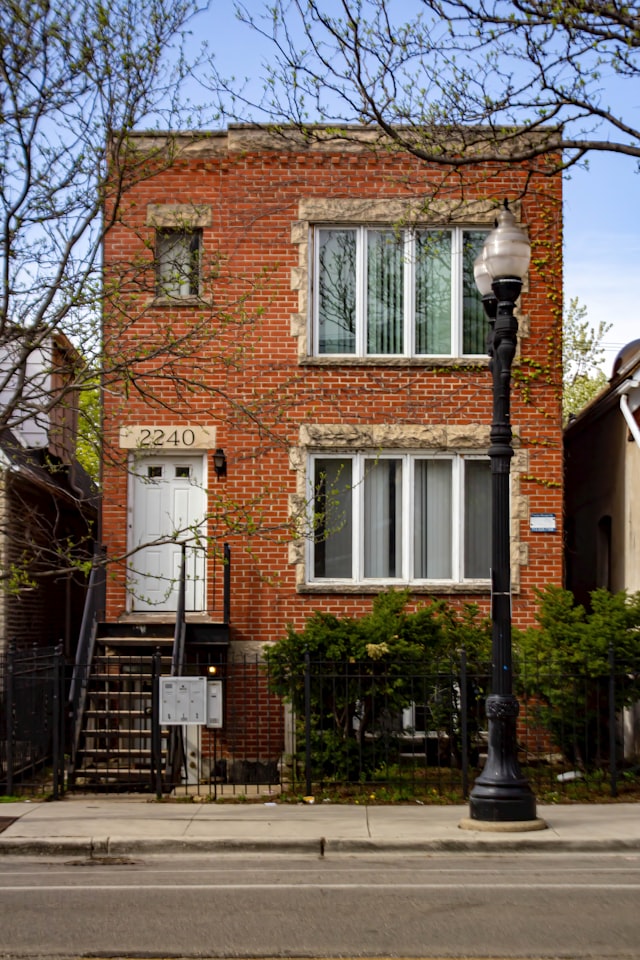
Two-flat country
Much of the West Side is built in small apartment buildings. CMAP's community snapshots of 2020 to 2024 census estimates count two-unit buildings as 39.7 percent of West Garfield Park's housing units, 32.9 percent of South Lawndale's, 31.1 percent of Humboldt Park's, 29.8 percent of Hermosa's, 27.9 percent of North Lawndale's and 26.6 percent of Austin's, against 13.1 percent citywide.
The Cook County Assessor's 2025 parcel file counts the buildings. Class 2-11, a building with two to six apartments, is the largest residential class in Austin (6,765 parcels), South Lawndale (5,188), Humboldt Park (4,437), North Lawndale (3,336), the Lower West Side (2,954), West Garfield Park (1,889), East Garfield Park (1,795) and Hermosa (1,426). Austin also has 4,498 one-story homes of 1,000 to 1,800 square feet and 2,017 older two-story houses. West Town is the exception: 15,922 of its 31,480 parcels are condominium units.
The buildings are old. CMAP puts the median housing unit at 1925 in Hermosa, where 72.1 percent of units predate 1940, at 1929 in South Lawndale, 1930 in Humboldt Park, 1933 on the Lower West Side, 1936 in North Lawndale and West Garfield Park, and 1941 in Austin. The city median is 1953. West Town's median is 1968, the result of newer construction.
Prices by West Side submarket
The Cook County Treasurer's tax year 2024 bill analysis quotes DePaul University's Institute for Housing Studies price index by housing submarket. From 2020 to 2024, prices rose 47.8 percent citywide. On the West Side:
- West Town, Near West Side: up 21.61 percent, to a 2024 median sale of $950,000.
- Lower West Side, New City, Bridgeport, McKinley Park, Armour Square: up 39.06 percent, median $355,000.
- Humboldt Park, Hermosa, Belmont Cragin, Montclare: up 51.39 percent, median $350,000.
- South Lawndale, Brighton Park, Gage Park: up 49.68 percent, median $245,500.
- Austin, North Lawndale, East Garfield Park, West Garfield Park: up 71.12 percent, median $247,500.
The slowest-growing submarket on that list has a median sale nearly four times the fastest-growing one. That's a reason to price a house on its own condition and recent comparable sales, not an average.
Who's buying, and who's in foreclosure
DePaul's 2025 data shows how widely the investor share varies across the West Side. Business buyers made 35.8 percent of residential purchases in West Garfield Park and 44.4 percent of its single-family purchases, 35.6 percent in East Garfield Park, 28.1 percent in North Lawndale, 25.2 percent in Austin and 24.5 percent in Humboldt Park. In West Town it was 13.8 percent and in Hermosa 14.0 percent. Chicago's rate was 17.3 percent.
Austin had 201 new residential foreclosure filings in 2025, up from 87 in 2021 (and down from 870 in 2010), and 50 completed foreclosure auctions. Humboldt Park had 91 filings, Belmont Cragin 70, West Town 66 and North Lawndale 65. Over 2005 to 2023, 51.5 percent of West Garfield Park's residential properties had at least one filing, along with 46.6 percent of North Lawndale's, 45.5 percent of East Garfield Park's, 42.9 percent of Humboldt Park's and 39.3 percent of Austin's. West Town's figure was 12.7 percent and Cook County's 20.5 percent.
If you've been served, Illinois law gives you 90 days to reinstate by paying the arrears and costs (735 ILCS 5/15-1602) and a right to redeem until the later of seven months after service or three months after judgment (735 ILCS 5/15-1603), ending before the judicial sale. The Circuit Court of Cook County's Mortgage Foreclosure Mediation Program offers free counseling and legal help at (855) 452-2637. The Cook County foreclosure timeline lays out each step.
The tax bills that doubled
The Treasurer found the biggest tax year 2024 increases on the South and West Sides. West Garfield Park's median homeowner bill rose 133 percent, to $3,448, and North Lawndale's 99 percent, to $3,791. West Garfield Park's median residential assessed value jumped 131.8 percent, to $19,700, and was still below its 2006 median of $23,828; its 2021 median of $8,500 had been more than 43 percent below 2018's. North Lawndale's median assessed value had dropped 25.8 percent in the 2021 reassessment. Commercial values moved the other way: East Garfield Park's commercial assessed value fell 17.87 percent from 2023 to 2024. For tax year 2025, billed in 2026, the median Chicago homeowner bill rose another 3.2 percent, to $4,597.
On a two-flat where the owner lives upstairs, the Assessor's Homeowner Exemption depends on the owner living there, and so do the senior exemptions. If taxes go unpaid, the Treasurer's next annual tax sale is December 15, 2026, for delinquent tax year 2023 taxes. Buyers at the sale purchase the debt, and a building with one to six units generally has three years from the sale to redeem under 35 ILCS 200/21-350, as amended by P.A. 104-553. The Cook County Clerk's office prepares an estimate of the cost of redemption.
Empty buildings and empty land
CMAP counts 20.0 percent of West Garfield Park's housing units as vacant, 18.0 percent of North Lawndale's and 12.5 percent of East Garfield Park's, against 9.1 percent citywide. Vacant land covers 15.6 percent of West Garfield Park, 14.9 percent of North Lawndale and 13.2 percent of East Garfield Park in CMAP's 2023 land use inventory, and the Assessor lists 1,544 vacant-land parcels in North Lawndale and 1,259 in East Garfield Park.
A vacant building in Chicago has to be registered with the Department of Buildings within 30 days of becoming vacant or of the owner taking title, whichever is later, and renewed every six months. The Department of Buildings lists a registration fee of $250 to $500, higher if the city has already found the building in violation.
Paperwork on a West Side two-flat
The unit count. A residential building with five or fewer units needs a Certificate of Zoning Compliance before the sale, certifying the legal number of units. The fee is $120. On a two-flat with a garden apartment or a greystone with a converted attic, this is where the legal count gets settled.
Water. Every Chicago transfer needs a Full Payment Certificate from the Department of Finance showing the water account is paid. The fee is $50.
Tenants. A sale doesn't end a lease. Owners occupy 26.6 percent of occupied homes in North Lawndale, 31.5 percent in East Garfield Park and 31.8 percent in West Garfield Park, CMAP counts, against 46.0 percent citywide, so many West Side sales come with tenants in place. Gather the leases, rents and deposit amounts early. The selling with tenants guide covers the Illinois rules.
Violations and lead. The Department of Buildings posts violations by address, with inspector comments, on the Chicago Data Portal. For a building put up before 1978, the EPA requires the federal lead pamphlet, disclosure of known lead hazards and a 10-day window for the buyer to test.
Estates. Cook County probate runs through the Probate Division at the Daley Center. A small estate affidavit can't transfer real estate the decedent owned in their own name, per Illinois Legal Aid Online, and with independent administration the representative can sell without a separate court order under 755 ILCS 5/28-8. The probate guide has the order of steps.
Listing versus selling to Fair Home Cash
A rehabbed two-flat, a kept-up bungalow or a condo in good repair draws financed buyers, and listing may net you more. Price that out first.
The direct sale fits the buildings that are hard to finance: the two-flat with violations on file, the greystone with a tenant who won't allow showings, the vacant building with a registration that lapsed, the foreclosure case that's moving, the estate nobody wants to manage from out of town. In those cases Fair Home Cash buys West Side houses and flats as-is. If the property is a fit, we make a written cash offer with the math attached. When we buy, we pay the closing costs and the transfer tax, the seller's share included, and the title company pays off the mortgage, back taxes and liens from the proceeds. There's no commission and no repair list, tenants in place are fine, and closing often takes 7 to 28 days once title is clear, on your date. The Chicago page covers the whole city.
Straight answers from Fair Home Cash for West Side sellers
My bill in West Garfield Park more than doubled. Was everyone's? The Treasurer reported the median homeowner bill there rose 133 percent for tax year 2024. Check that your exemptions are on the bill and look up your payment status with the Treasurer.
Can I sell a two-flat with both units rented? Yes. The leases continue under the new owner. Share them, and the security deposit amounts, with any buyer early.
Investors keep calling about my building. Is that normal? In West Garfield Park, DePaul found businesses made 35.8 percent of 2025 residential purchases. Get every offer in writing and compare at least two.
Sources: Wikipedia, West Side, Chicago; CMAP Community Data Snapshot, West Garfield Park; CMAP, East Garfield Park; CMAP, North Lawndale; CMAP, South Lawndale; CMAP, Humboldt Park; CMAP, Hermosa; CMAP, Austin; CMAP, Lower West Side; CMAP, West Town; Cook County Assessor parcel universe, tax year 2025; Cook County Assessor, residential classification examples; Cook County Treasurer, tax year 2024 bill analysis; Cook County Treasurer, tax year 2024 bills (Nov. 17, 2025); Cook County Treasurer, tax year 2025 bill analysis; DePaul Institute for Housing Studies: West Garfield Park, East Garfield Park, North Lawndale, Austin, Humboldt Park, Belmont Cragin, Hermosa, West Town, Chicago, Cook County; 735 ILCS 5/15-1602; 735 ILCS 5/15-1603; Circuit Court of Cook County, foreclosure mediation; Cook County Assessor, exemptions; Cook County Treasurer, due dates and tax sale; 35 ILCS 200/21-350; Cook County Clerk, tax redemption; Chicago Department of Buildings, vacant buildings; City of Chicago, Certificate of Zoning Compliance; City of Chicago, Full Payment Certificates; Chicago Data Portal, Building Violations; EPA, lead disclosure rule; Circuit Court of Cook County, Probate Division; Illinois Legal Aid Online, small estate affidavit; 755 ILCS 5/28-8
