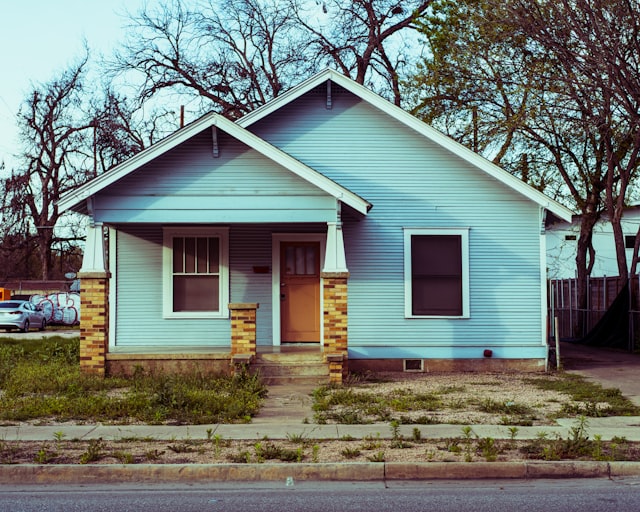
Ravenswood Manor, Mayfair and the bend in the North Branch
Albany Park is Chicago's Community Area 14, on the Northwest Side, and the North Branch of the Chicago River wraps its east and north edges. It holds four traditional pockets: Albany Park proper, Mayfair and North Mayfair west of Pulaski, and Ravenswood Manor between Sacramento Avenue and the river. The Brown Line ends at Kimball, and the elevated's arrival set off a building boom. The city officially nicknamed the stretch of Lawrence Avenue between Kedzie and Pulaski Seoul Drive, from its years as Chicago's Koreatown.
CMAP's snapshot of 2020-2024 census estimates counts 45,538 residents, 21.0 percent fewer than in 2000.
Six in ten Albany Park units went up before 1940
CMAP puts 60.8 percent of Albany Park's housing units before 1940, against 38.8 percent citywide, and the median year built is 1931. Only 21.5 percent of units are detached single-family houses. Two-unit buildings hold 17.3 percent and three- and four-unit buildings 19.0 percent. DePaul's Institute for Housing Studies (IHS) counts 30.4 percent of units in two-to-four-unit buildings and 14.1 percent in condos. Ravenswood Manor is its own case: a National Register historic district full of bungalows, where some riverside homes have their own docks.
Chicago won't issue transfer stamps on a building with five or fewer units until the Department of Planning and Development issues a Certificate of Zoning Compliance counting the legal dwelling units. It costs $120. Every Chicago transfer also needs a $50 Full Payment Certificate showing the water account is paid. A building from that era is old enough that the state lead brochure and the federal lead disclosure come with the sale too.
290 sales and a 7.1 percent price climb
IHS counts 290 residential sales in 2025, about half the 593 recorded in 2021, or 3.5 sales per 100 residential parcels. Comparables are thin. Prices, though, have held up. Single-family values in the IHS Albany Park/North Park index rose 7.1 percent in the year to the fourth quarter of 2025, against 4.9 percent for Chicago as a whole, and they sit 27.8 percent above their 2006 high.
Business buyers made 13.8 percent of Albany Park purchases in 2025, including 15.9 percent of single-family sales and 14.6 percent of two-to-four-unit sales. The countywide rate was 15.4 percent. Owner occupancy has been rising, from 33.9 percent of occupied units in 2000 to 43.7 percent in the 2020-2024 estimates, still a bit under the 46.0 percent city rate.
Filings on Area 14 and the Cook County tax dates
IHS recorded 18 new residential foreclosure filings in Albany Park in 2025, down from 375 in 2010. Still, 21.7 percent of its residential properties had at least one filing from 2005 through 2023, a little above the 20.5 percent share for all of Cook County. A case here goes to the Mortgage Foreclosure Section of the Chancery Division at the Daley Center, and once you're served, the free mediation helpline is (855) 452-2637. Illinois lets you redeem until the later of seven months after service or three months after the judgment, and that right runs out before the sale. The Cook County foreclosure timeline walks through each step.
After the 2024 reassessment, the median Chicago residential bill for tax year 2024 climbed 16.7 percent to $4,457. If taxes fall behind, the Treasurer lists December 15, 2026 for the next annual tax sale, and the Cook County selling guide has the rest.
Working through $489,500 on the Northwest Side
IHS puts the median single-family sale price for its Albany Park/North Park area at $489,500 in its fourth-quarter 2025 index data. It includes North Park and leaves out condos and two-flats, so it's a rough guide. Say your house would list there:
- Commission at about 4.9 percent (Clever's Illinois average, updated September 2026): roughly $24,000
- Closing costs near 1.2 percent: about $5,900
- Your stamps (the CTA share of the city tax, plus the state and county stamps): about $2,200
- Water and zoning certificates: $170
That's near $32,000 before any repairs an inspector finds in a house that's nearly a century old. At the $4,457 median city bill, taxes alone run about $370 a month while it sits.
Or, if the property is a fit, a cash buyer may make an offer, the closing date can be worked out around your plans, and you may be able to sell as-is (the state disclosure form allows it). With prices still climbing, listing can be the better call, and that's fine. Just run both numbers first. There's more on selling in Chicago.
Sources: CMAP, Albany Park Community Data Snapshot; DePaul Institute for Housing Studies, Albany Park data portal; DePaul Institute for Housing Studies, Cook County House Price Index; DePaul Institute for Housing Studies, Q4 2025 price index release; DePaul Institute for Housing Studies, Cook County data portal; City of Chicago DPD, Certificate of Zoning Compliance; City of Chicago Department of Finance, Full Payment Certificates; City of Chicago Department of Finance, Real Property Transfer Tax; Cook County Clerk, transfer fees; Cook County Treasurer, 2024 tax bill news release; Circuit Court of Cook County, foreclosure mediation; Clever commission survey
