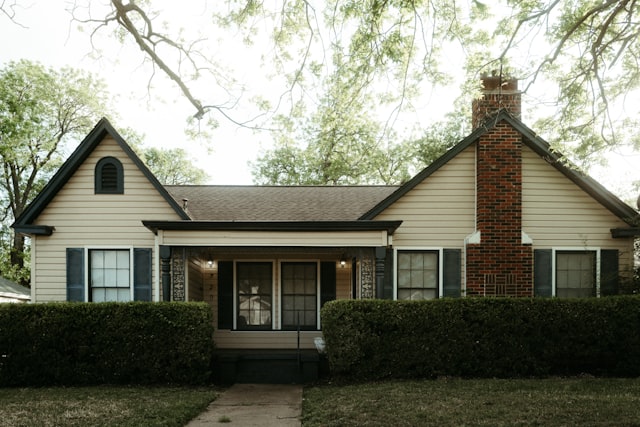
Two community areas around the Garfield Park Conservatory
Garfield Park is two community areas on the city's map, West Garfield Park and East Garfield Park. The park, home to the Garfield Park Conservatory, sits inside East Garfield Park, the community area bounded by the Union Pacific tracks, Taylor Street, Hamlin and Rockwell. West of the park, the blocks between Pulaski and Cicero carry the K-Town street names, Keeler, Kildare, Kostner.
What you're most likely selling here is a two-flat. CMAP's summary of 2020 to 2024 census estimates puts 39.7 percent of West Garfield Park's housing units in two-unit buildings, three times the city's 13.1 percent. Another 25.7 percent sit in three- and four-unit buildings. East Garfield Park runs 28.4 and 24.6 percent. Detached houses are about one unit in ten.
Brick two-flats from the 1930s and 1940s
The median building in West Garfield Park went up in 1936, and 54.6 percent of units predate 1940. East Garfield Park's median is 1943, with 47.5 percent before 1940. The citywide median is 1953.
That age shows up in the paperwork. Anything built before 1978 needs the federal lead pamphlet, a lead disclosure and a 10-day window for the buyer to test. Selling a Chicago building with five or fewer units takes a Certificate of Zoning Compliance that certifies how many legal units it has, with a $120 filing fee. If the basement unit in your two-flat was never on the books, that's where it comes up. You'll also need a water Full Payment Certificate ($50) before the city issues transfer stamps.
Empty units and business buyers on both sides
CMAP counts 20.0 percent of West Garfield Park's housing units as vacant, against 9.1 percent citywide, and 12.5 percent in East Garfield Park. Only about 32 percent of occupied units on either side are owner-occupied. If your building is already empty, Chicago's vacant building ordinance expects you to register it within 30 days and renew every six months, and fines run $500 to $1,000 per offense, each day counting separately, and can turn into a lien. That matters most on an inherited house sitting while the family sorts things out.
DePaul's Institute for Housing Studies counted 132 residential sales in East Garfield Park in 2025 and 120 in West Garfield Park. Business buyers made 35.6 percent of East Garfield Park purchases and 35.8 percent in West Garfield Park, more than a third on each side, and 46.2 percent of two-to-four unit purchases in East Garfield Park.
Foreclosure filings on West Side two-flats, 2020 to 2025
IHS counts foreclosure filings in East Garfield Park rising from 11 in 2020 to 34 in 2025, and West Garfield Park from 22 to 41. Most of the 2025 filings, 19 in East and 33 in West, hit two-to-four unit buildings. And 45.1 percent of owner households in West Garfield Park (36.6 percent in East) spend more than 30 percent of income on housing.
Cases go to the Mortgage Foreclosure Section of the Chancery Division, Circuit Court of Cook County. Under Illinois law you can reinstate within 90 days of service by paying what's past due plus costs. Redemption runs until the later of 7 months after service or 3 months after the judgment, and the sale comes after that. Back taxes are separate: at the county's annual tax sale, what sells is a lien on the property, not the building. The Cook County page has the court's free mediation helpline and the next tax sale date.
What $407,500 looks like after costs
Redfin's median sale price for East Garfield Park was $407,500 for March through May 2026, with a median 72 days on market. West Garfield Park came in at $425,000 and 78 days, and East Garfield Park two-to-four unit buildings at $568,000.
Say yours would sell near $407,500. The buyer generally pays the city's $3.75 per $500, about $3,056. Your side of a listing looks roughly like this, with commission at about 4.9 percent (Clever's Illinois average, updated September 2026):
- Commission: about $20,000
- Closing costs near 1.2 percent: about $4,900
- State and county transfer taxes, which the Cook County Clerk puts on the seller: about $408 and $204
- Chicago's CTA portion, which the seller generally pays: about $1,223
- Water and zoning certificates: $50 and $120
That's near $26,900 before repairs, plus about $370 a month in taxes while it sits, based on Chicago's $4,457 median residential bill for tax year 2024.
The other route: if the property is a fit, a cash buyer may make you an offer, and you pick the closing date. Illinois disclosure rules allow an as-is sale, though you still fill out the form. Listing may net more, especially on a clean two-flat, and that's a fine choice. Run both numbers first, and the Chicago page has the citywide picture.
Sources: CMAP Community Data Snapshot, East Garfield Park; CMAP Community Data Snapshot, West Garfield Park; DePaul Institute for Housing Studies, East Garfield Park; DePaul Institute for Housing Studies, West Garfield Park; Redfin Data Center; City of Chicago, Certificate of Zoning Compliance; City of Chicago, Full Payment Certificates; Chicago Department of Buildings, vacant building ordinance; Cook County Clerk, transfer fees; City of Chicago, real property transfer tax; Clever, average commission survey; Cook County Treasurer, 2024 tax bill release
