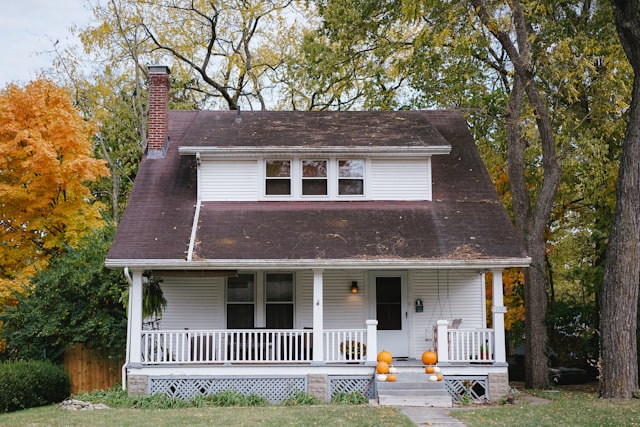
Greystones, K-Town and Douglas Park
North Lawndale is Chicago's Community Area 29, on the West Side between Western Avenue (2400 West) and Pulaski Road (4000 West), with the Merigold area extending west of Pulaski. It was annexed to the city in 1869. Douglas Park is inside the community area, Ogden Avenue runs on the diagonal, the Pink Line stops at Kedzie, Central Park, Pulaski and Kostner, and the old Sears complex is now Homan Square, its tower reopened in 2015. West of Pulaski the street names all start with K (Karlov, Keeler, Kedvale, Kildare, Kostner), which is why people call that stretch K-Town.
North Lawndale has the largest concentration of greystones in Chicago, the limestone-fronted two- and three-flats the neighborhood is known for. The census numbers show how much of the neighborhood is still those buildings. CMAP's community snapshot of 2020 to 2024 estimates puts 27.9 percent of housing units in two-unit buildings and 33.2 percent in three- and four-unit buildings, against 13.1 and 14.4 percent citywide. Detached houses are 13.1 percent. The median unit was built in 1936, and 53.8 percent went up before 1940.
A neighborhood with a lot of empty land
The Cook County Assessor's 2025 parcel file lists 1,544 parcels in class 1-00, vacant land, plus 244 more in class 2-41, a vacant lot owned together with the house next door. That compares with 3,336 parcels in class 2-11, the two-to-six-flat buildings. CMAP's analysis of the 2023 land use inventory counts 305.6 acres of vacant land, 14.9 percent of the community area. Another 1,852 parcels are tax-exempt, which includes churches, schools, the park and public property.
CMAP counts 18.0 percent of North Lawndale's housing units as vacant, double the city's 9.1 percent, and owners occupy just 26.6 percent of occupied homes, against 46.0 percent citywide. The median household income is $42,221, against $77,902 for Chicago.
Many buildings here have passed down a generation or two.
The tax bill that doubled
The single biggest change for North Lawndale owners in the past two years was the tax bill. The Cook County Treasurer reported in November 2025 that the median homeowner tax bill in North Lawndale for tax year 2024 rose nearly $1,900, about 99 percent, after the reassessment. Across Chicago the median residential bill rose 16.7 percent to $4,457. For an owner who had been paying a modest bill on an inherited greystone, that change alone can turn holding the building from affordable to not.
If the taxes are behind, know the calendar. The second installment of tax year 2025 bills was due October 1, 2026. The Treasurer's next annual tax sale is set for December 15, 2026, and it offers delinquent tax year 2023 taxes. Buyers at that sale purchase the tax debt, not the building, and they bid by the interest rate they'll accept. For homes with one to six units, Illinois law (35 ILCS 200/21-350, as amended by P.A. 104-553) generally allows three years from the sale to redeem, while vacant non-farm property gets only one year. The Cook County Clerk's office prepares an estimate of the cost of redemption and runs a Property Tax Redemption Legal Help Desk. If the debt goes unredeemed, the tax buyer can ask the court for a tax deed.
The exemptions matter here too. The Cook County Assessor's Homeowner and Senior Exemptions require the owner to live in the home as a principal residence, so a building whose owner has died or moved out loses the basis for them, and the bill rises again.
Vacant buildings and the city's rules
If a North Lawndale building is empty, Chicago's Municipal Code (section 13-12-125) requires the owner to register it with the Department of Buildings within 30 days of it becoming vacant or within 30 days of taking ownership, whichever is later, and to renew every six months. The Department of Buildings lists a registration fee of $250 to $500, higher if the city has already found the building in violation. The city's vacant building guidance also makes owners responsible for keeping an empty building secured, and an owner whose unsecured building injures someone can face criminal charges.
The Department of Buildings publishes every violation on the Chicago Data Portal, searchable by address, with the inspector's comments. Before you sell, look up your address. Open violations follow the building into a sale, and a financed buyer's lender will see them.
What sells, and who buys
DePaul University's Institute for Housing Studies counted 242 residential sales in North Lawndale in 2025, down from 372 in 2021. Business buyers made 28.1 percent of residential purchases, nearly twice the 15.4 percent county rate. DePaul finds that 53.3 percent of residential properties here are two-to-four-unit buildings and 34.9 percent are larger apartment buildings.
DePaul finds 46.6 percent of North Lawndale's residential properties had at least one foreclosure filing between 2005 and 2023, against 20.5 percent countywide. New filings went from 317 in 2010 to 26 in 2021 and back up to 65 in 2025. Of the 13 foreclosure auctions completed in 2025, 11 ended with the lender taking the property.
If you are in that pipeline, the Illinois foreclosure statute lets you reinstate within 90 days of service by paying the arrears and costs, and your right to redeem runs until the later of seven months after service or three months after judgment. Once served, call the Circuit Court's free mediation helpline at (855) 452-2637. A sale before the judicial sale can let you keep whatever equity remains. The Cook County foreclosure timeline maps it.
The heirs' building
When the owner on title has died, the sale starts in probate. Cook County estates run through the Probate Division of the Circuit Court, on the 18th floor of the Daley Center, with the probate clerk on the 12th. A small estate affidavit doesn't work when the person who died owned real estate in their name, according to Illinois Legal Aid Online, so a representative usually gets appointed. With independent administration, Illinois law (755 ILCS 5/28-8) lets that representative sell the building without a separate court order, unless the will specifically left it to someone, who then has to consent in writing. Creditors get at least six months from the first published notice to file claims (755 ILCS 5/18-3). The inherited house guide covers the rest.
Two ways to sell a North Lawndale greystone
A restored greystone with legal units and working systems draws buyers, and listing may net you more. If that's your building, list it.
Many aren't. Empty for a few years, a violation on the porch, water in the basement, a tax bill that doubled, heirs in three states. Fair Home Cash buys North Lawndale greystones, two-flats and houses in that condition, as-is. If the property is a fit, we make a written cash offer and show the math. When we buy, we pay the closing costs and the transfer tax, the seller's share included, and any back taxes or liens are paid from the proceeds at the title company. There's no commission and no repair list. Closing often takes 7 to 28 days once title is clear, on a date you choose. Neighboring pages cover Garfield Park, Little Village and Austin, and the West Side overview maps the area.
Straight answers from Fair Home Cash for North Lawndale sellers
Our taxes went up almost 100 percent. Is that a mistake? The Treasurer reported that North Lawndale's median homeowner bill rose about 99 percent for tax year 2024, so a big jump is not unusual. You can still check that your exemptions are right with the Assessor and appeal the assessment if the value looks wrong.
The building has been empty for two years. Do I owe anything for that? Chicago requires vacant buildings to be registered within 30 days and renewed every six months, and owners must keep them secured. If it was never registered, sort that out with the Department of Buildings, or sell it and let the buyer take over that obligation.
Can I sell before probate is finished? Usually the sale happens inside the probate case, by the appointed representative. With independent administration no separate court order is needed for the sale itself.
Sources: CMAP Community Data Snapshot, North Lawndale; Cook County Assessor parcel universe, tax year 2025; Cook County Assessor, class definitions; DePaul Institute for Housing Studies, North Lawndale; DePaul Institute for Housing Studies, Cook County; Wikipedia, North Lawndale, Chicago; Cook County Treasurer, tax year 2024 bills (Nov. 17, 2025); Cook County Treasurer, due dates and tax sale; 35 ILCS 200/21-350; Cook County Clerk, tax redemption; Better Government Association, how the tax sale works; Cook County Assessor, exemptions; Chicago Department of Buildings, vacant buildings; City of Chicago, vacant building registration help; Chicago Data Portal, Building Violations; 735 ILCS 5/15-1602; 735 ILCS 5/15-1603; Circuit Court of Cook County, foreclosure mediation; Circuit Court of Cook County, Probate Division; Illinois Legal Aid Online, small estate affidavit; 755 ILCS 5/28-8; 755 ILCS 5/18-3
