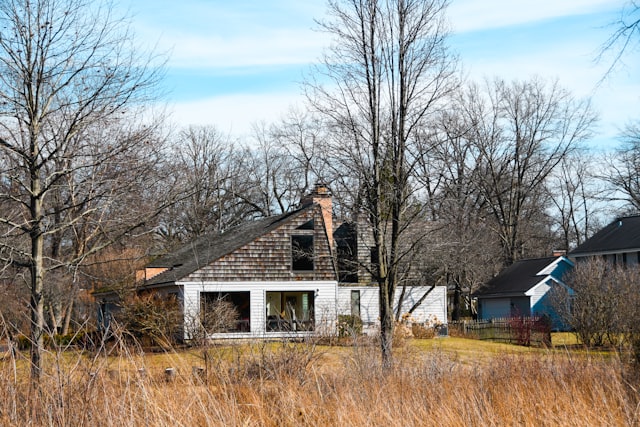
La Villita, Marshall Square and the old Crawford side
Little Village sits in Chicago's Community Area 30, South Lawndale, and roughly fills it: west of Western Avenue, east of Cicero Avenue, north of I-55 and south of the BNSF tracks. People here often just call it La Villita. The community area actually holds two neighborhoods, Little Village and Marshall Square, and in the early days the stretch west of Pulaski (then Crawford Avenue) was known as Crawford.
CMAP's snapshot of 2020-2024 census estimates counts 69,884 residents, down 11.9 percent from 2010. Households are big, averaging 3.0 people against 2.3 citywide.
Housing stock that mostly dates to the 1920s
This is two-flat and three-flat territory. Two-unit buildings hold 32.9 percent of South Lawndale's housing units and three- and four-unit buildings another 27.3 percent, so roughly 60 percent of homes sit in small multi-unit buildings, against about 27.5 percent across Chicago. Detached single-family houses are 23.0 percent. The median year built is 1929 (the city's is 1953), and 63.3 percent of units went up before 1940.
Ownership has been climbing. The owner-occupied share rose from 36.0 percent in 2000 to 46.5 percent in the 2020-2024 estimates, and the vacancy rate fell from 18.2 percent in 2010-2014 to 7.0 percent. It's a tight market, and plenty of buildings have a renter upstairs, since 53.5 percent of occupied units are rented.
Counting legal units before the city stamps the deed
For a building with five or fewer units, Chicago won't issue transfer tax stamps without a Certificate of Zoning Compliance, and without stamps the deed doesn't record. The certificate states how many legal dwelling units the building has, which matters on a 1920s two-flat where a garden unit may have been added along the way. Planning and Development charges $120, gives an initial answer within five business days, and sends an inspector if its records can't confirm the count. You'll also need a Full Payment Certificate showing the water account is paid off. It costs $50, and any balance has to be cleared first.
Illinois's disclosure report covers buildings of one to four units, so it applies to most homes here, and it lets the parties agree to an as-is sale. About 83 percent of units were built before 1970, so the state lead brochure and the federal lead disclosure (with its 10-day inspection window) come along too.
Behind on the mortgage or the tax bill in South Lawndale
A Little Village foreclosure goes to the Mortgage Foreclosure Section of the Cook County Chancery Division. After you're served, the court's free mediation helpline is (855) 452-2637. You can reinstate within 90 days of service by catching up the missed payments and costs. Redemption runs until the later of seven months after service or three months after the judgment, and it ends before the judicial sale, not after.
On taxes, the second installment of the tax year 2025 bill is due October 1, 2026, and the Treasurer lists December 15, 2026 for the next annual tax sale, where investors bid on a lien for the unpaid taxes. The Cook County foreclosure timeline walks through each step, and the Cook County selling guide covers the rest of the county.
What $265,000 looks like after costs in Little Village
DePaul's Institute for Housing Studies doesn't price Little Village alone. It groups South Lawndale with Brighton Park and Gage Park, and that group's 2025 median single-family sale was $265,000, under the $320,000 city median. Single-family prices in the group rose 11.0 percent from late 2024 to late 2025, the biggest gain of any Cook County submarket in the index, and they're 283.6 percent above their post-recession low.
Say your place would list near $265,000. Clever's survey, updated September 2026, puts the Illinois average commission at 4.90 percent. Chicago's transfer tax totals $5.25 per $500, and the buyer generally pays the $3.75 city share, near $2,000 here. Your side of a listing looks roughly like this:
- Commission at about 4.9 percent: about $13,000
- Closing costs at about 1.2 percent: about $3,200
- Your $1.50 CTA share of the city transfer tax: about $800
- State and county stamps, which the Cook County Clerk lists as the seller's: about $265 and $130
- Water and zoning certificates: $50 and $120
That's roughly $17,500 before a buyer's inspector looks at a building that's nearly a century old. Chicago's median residential tax bill for tax year 2024 was $4,457, around $370 a month while the building sits unsold.
Or, if the property is a fit, a cash buyer may make an offer, you pick the closing date, and the building can go as-is. With prices rising, listing may net more, and that's a fair choice. Run both numbers first, and see selling in Chicago for the citywide picture.
Sources: City of Chicago, community area boundaries; CMAP Community Data Snapshot, South Lawndale; DePaul Institute for Housing Studies, Cook County House Price Index Q4 2025; City of Chicago DPD, Certificate of Zoning Compliance; City of Chicago Department of Finance, Full Payment Certificates; City of Chicago Department of Finance, Real Property Transfer Tax; Cook County Clerk, transfer fees; Circuit Court of Cook County, foreclosure mediation; Illinois Code of Civil Procedure, 735 ILCS 5 (reinstatement and redemption, 15-1602 and 15-1603); Cook County Treasurer, due dates and tax sale; Cook County Treasurer, tax year 2024 bills; Clever commission survey
