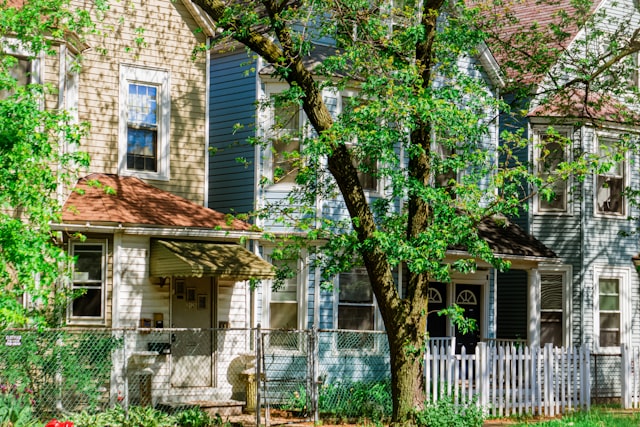
Two-flat country between Western and the canal
Brighton Park is Chicago's Community Area 58, on the Southwest Side between Western Avenue and the Sanitary and Ship Canal. It's a neighborhood of small apartment buildings. CMAP's snapshot of 2020-2024 census estimates puts 44.2 percent of its housing units in two-unit buildings, against 13.1 percent citywide, and another 19.1 percent in three- and four-unit buildings. DePaul's Institute for Housing Studies, working from Cook County Assessor records, counts 68.5 percent of the units in buildings with two to four units.
The buildings are old, too. The median year built is 1935, against 1953 citywide, and 55 percent of units predate 1940. So you're probably selling a century-old two-flat, maybe with a tenant upstairs, and a buyer's inspector will look hard at it.
The two certificates a Brighton Park deed needs
Every sale of a residential building with five or fewer units needs a Certificate of Zoning Compliance, which certifies how many legal dwelling units the building has, and the city won't issue transfer stamps without it. Here that matters, because it counts legal units, not whatever got built out in the basement. The Department of Planning and Development charges $120 and inspects if its records can't confirm the count.
You also need a Full Payment Certificate showing the water account is paid. It's required on every Chicago transfer, taxable or exempt, it costs $50, and any water balance has to be cleared first. Both certificates follow the building, so a cash sale needs them too.
Thin sales and the biggest price jump in Chicago's index
IHS counts 163 residential sales in 2025, 66 single-family homes and 95 buildings with two to four units. That's 2.3 sales per 100 residential parcels, down from 8.1 in 2005. Comparables are thin, so one odd sale on your block can skew an appraisal.
Prices, though, keep climbing. IHS groups Brighton Park with South Lawndale and Gage Park in its house price index. Single-family prices in that group rose about 11 percent in the year to the fourth quarter of 2025, the biggest gain of the 17 Chicago areas it tracks, and they're up about 64 percent from the start of the pandemic, versus about 55 percent for the city. Business buyers made 11.7 percent of Brighton Park purchases in 2025 (13.7 percent of two-to-four-unit purchases), below the 15.4 percent Cook County rate. The owner-occupied share rose from 46.5 percent in the 2010-2014 estimates to 56.4 percent in 2020-2024.
Foreclosure filings and the tax clock in Area 58
IHS recorded 24 new residential foreclosure filings in Brighton Park in 2025, against 349 in 2009, and six completed foreclosure auctions. Still, 25.9 percent of the neighborhood's residential properties have had at least one filing from 2005 through 2023, above the 20.5 percent countywide share.
If it happens to you, the case goes to the Cook County Chancery Division, and once you're served, the free mediation helpline is (855) 452-2637. In Illinois you can redeem until the later of seven months after service or three months after the judgment, and that right ends before the sale, not after it. The second installment of the tax year 2025 bill is due October 1, 2026, and the next annual tax sale is set for December 15, 2026. The Cook County foreclosure timeline and the Cook County selling guide cover the redemption rules and the tax sale in detail.
Running $265,000 through both routes
IHS puts the 2025 median single-family sale price for the Brighton Park, South Lawndale and Gage Park group at $265,000. That's a three-area figure, and it sits below the $320,000 city median in the same data. Say your house would list there:
- Commission at about 4.9 percent (Clever's Illinois average, updated September 2026): roughly $13,000
- Closing costs near 1.2 percent: about $3,200
- Your stamps (CTA share, state, county): about $1,190
- Water and zoning certificates: $170
That's near $17,600 before repairs, and an inspector will have plenty to flag on a 1930s building. On Chicago's transfer tax, the seller generally pays only the CTA portion while the buyer pays the city's share, and the Cook County Clerk lists the seller as liable for the state and county stamps. The median Chicago residential tax bill was $4,457 for tax year 2024, roughly $370 for every month a house sits.
Or, if the property is a fit, a cash buyer may make an offer, you pick the closing date, and you may be able to sell as-is. Plenty of owners list anyway, and with prices rising that can be the right call. Just run both numbers first. There's more on selling in Chicago.
Sources: DePaul Institute for Housing Studies, Brighton Park data portal; DePaul Institute for Housing Studies, Cook County House Price Index; CMAP, Brighton Park Community Data Snapshot; DePaul Institute for Housing Studies, Cook County data portal; City of Chicago DPD, Certificate of Zoning Compliance; City of Chicago Department of Finance, Full Payment Certificates; City of Chicago Department of Finance, Real Property Transfer Tax; Cook County Clerk, transfer fees; Cook County Treasurer, 2024 tax bill news release; Cook County Treasurer, due dates; Circuit Court of Cook County, foreclosure mediation; Clever commission survey
