The park, the boulevard and the K-Town blocks
Humboldt Park, Chicago's Community Area 23, runs from Bloomingdale Avenue on the north to the Union Pacific tracks on the south, and from the rail line between Kostner and Cicero on the west to the park itself on the east. The 207-acre park was laid out as part of Chicago's boulevard system, and its 1895 stables and 1907 boathouse still stand. West of Sacramento Boulevard people tend to say West Humboldt Park, and the blocks west of Pulaski are part of the K-Town grid of streets that start with K.
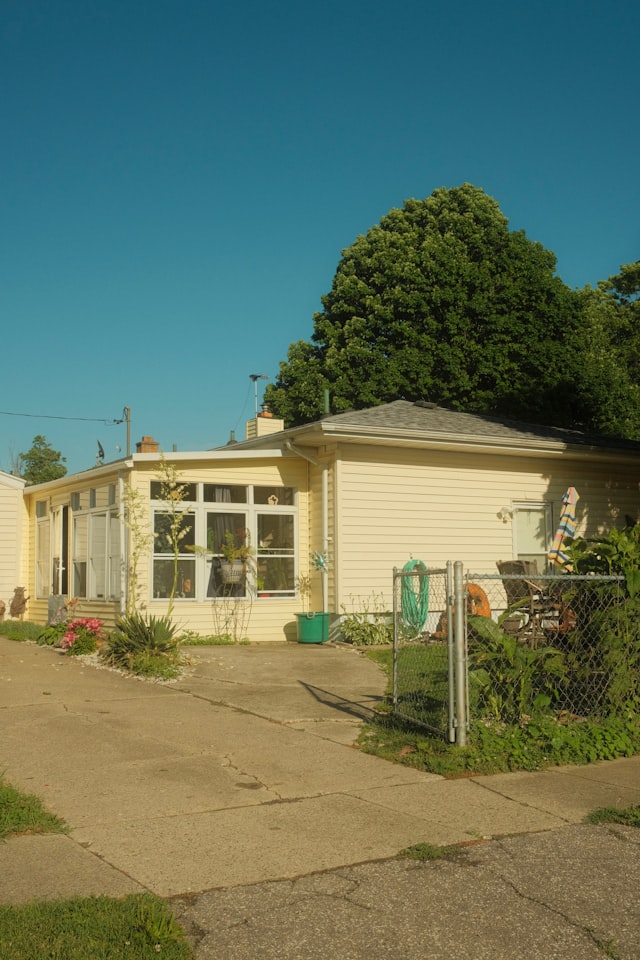
The neighborhood grew in a hurry after the Great Chicago Fire of 1871, because it lay just outside the city's fire-code limits and builders could put up cheaper construction there. Streetcars arrived on North Avenue in 1895 and on Pulaski in 1911, and North and Pulaski became a shopping hub. That history explains a lot of the mix today: greystones throughout the neighborhood, older buildings put up cheaply outside the fire limits, and, by the Assessor's count, thousands of bungalow-size houses.
The flats, by the numbers
CMAP's community snapshot of 2020 to 2024 census estimates puts 31.1 percent of Humboldt Park's housing units in two-unit buildings and 25.7 percent in three- and four-unit buildings, against 13.1 and 14.4 percent for Chicago. Detached houses are 20.7 percent. The median unit was built in 1930, among the oldest in the city, and 62.3 percent of units went up before 1940.
The Cook County Assessor's 2025 parcel file lists 4,437 Humboldt Park parcels in class 2-11, buildings with two to six apartments, and 345 more in class 2-12, a storefront with apartments. Bungalow-size houses are the next group: 1,619 parcels in class 2-03 (one story, 1,000 to 1,800 square feet) and 1,174 in class 2-02 (one story, under 1,000 square feet). DePaul University's Institute for Housing Studies finds 55.6 percent of the community area's residential properties are two-to-four-unit buildings.
Owners occupy 40.7 percent of occupied homes, a little under the city's 46.0 percent. Vacancy runs at 9.1 percent of units, the same as the city. The Assessor also counts 763 vacant-land parcels and 208 lots owned together with the house next door.
What a century-old flat brings to the closing table
A 1930 building has been rewired, replumbed and reroofed in pieces, by different owners, for decades. None of that stops a sale. It does shape who can buy. A buyer using an FHA or conventional loan brings an appraiser and an inspector, and the repair list they write is negotiated against your price.
Four lookups help before you talk to anyone:
The violation record. The Department of Buildings publishes violations on the Chicago Data Portal by address, with status and inspector comments. Check it before a buyer's title search does.
The legal unit count. A Chicago sale of a residential building with five or fewer units needs a Certificate of Zoning Compliance certifying how many units are legal. The filing fee is $120. A garden unit or a converted attic that never went through zoning comes up here.
The water account. City transfer stamps wait on a Full Payment Certificate from the Department of Finance showing water and sewer are paid. The fee is $50.
Lead. Pre-1978 housing requires the EPA's lead pamphlet, disclosure of any known lead hazards and records, and a 10-day window for the buyer to test. The Illinois disclosure form asks what you know about lead paint and lead water pipes, and about flooding or leakage in the basement.
If the flats are rented, the leases go with the building. Gather the leases and the deposit amounts before you start. The selling with tenants guide has the details.
Sales, investors and the foreclosure record
DePaul counted 351 residential sales in Humboldt Park in 2025, against 437 in 2021, a smaller drop than many West Side areas. Business buyers made 24.5 percent of residential purchases and 19.3 percent of single-family purchases, against 15.4 percent countywide.
DePaul finds 42.9 percent of Humboldt Park's residential properties had at least one filing between 2005 and 2023, more than double the 20.5 percent county share. Filings went from 562 in 2010 down to 17 in 2021, then rose to 91 in 2025. Of the 22 foreclosure auctions completed in 2025, 15 ended with the lender taking the property.
If you've been served, the Illinois foreclosure statute lets you reinstate within 90 days by paying what's past due plus costs, and your right of redemption lasts until the later of seven months after service or three months after judgment. The Circuit Court of Cook County's mediation program, free once you have a summons, answers at (855) 452-2637. Selling before the judicial sale can let you keep the equity that's left. The Cook County foreclosure timeline shows the steps.
Taxes: the December sale and your exemptions
The Cook County Treasurer reported that the median Chicago residential tax bill for tax year 2024 rose 16.7 percent to $4,457. If yours went unpaid, the Treasurer's next annual tax sale, December 15, 2026, offers delinquent tax year 2023 taxes, and the second installment of tax year 2025 was due October 1, 2026. At the sale, investors buy the debt, not the building. A home with one to six units generally gets three years from the sale to redeem under 35 ILCS 200/21-350, as amended by P.A. 104-553 for certificates issued on or after July 10, 2026, and the Cook County Clerk's office prepares an estimate of the cost of redemption.
The Assessor's Homeowner and Senior Exemptions require the owner to live in the property as a principal residence. On a flat where the owner lived downstairs and has since died or moved, the exemptions no longer fit, and the bill reflects that.
Inherited flats
Humboldt Park has many buildings bought by one generation and now held by the next. In Cook County, estates go through the Probate Division at the Daley Center. A small estate affidavit can't pass a house the person owned in their own name, according to Illinois Legal Aid Online, so a representative is usually appointed. With independent administration, Illinois law (755 ILCS 5/28-8) lets that person sell real estate without a separate court order, unless the will specifically left the building to someone, who must then agree in writing. The inherited house guide walks through it.
Two routes
A greystone two-flat that's been kept up, with legal units and paying tenants, sells well on the open market, and listing may net you more. If that describes your building, list it and compare.
If it doesn't, a frame building that needs everything, an estate, a foreclosure clock, tenants who won't let anyone in, Fair Home Cash buys Humboldt Park homes and flats as-is. If the property is a fit, we make a written cash offer with the math attached. When we buy, we pay the closing costs and the transfer tax, the seller's share included. No commission, no repairs, and closing often takes 7 to 28 days once title is clear, on your date. Nearby pages cover Belmont Cragin, Garfield Park and Austin, and the West Side overview covers the area.
Straight answers from Fair Home Cash for Humboldt Park sellers
Our building is wood frame, not brick. Is it harder to sell? It can take more explaining. On any old frame building, buyers and inspectors look hard at siding, porches and the foundation. A cash buyer prices the condition up front instead of renegotiating after an inspection.
Can I sell a three-flat with all three units rented? Yes. Leases continue under the new owner. Share the leases, the rents and the deposits with any buyer early.
Where can I look up city violations on my building? Search the address in the Department of Buildings violations data on the Chicago Data Portal.
Sources: CMAP Community Data Snapshot, Humboldt Park; Cook County Assessor parcel universe, tax year 2025; Cook County Assessor, residential classification examples; DePaul Institute for Housing Studies, Humboldt Park; DePaul Institute for Housing Studies, Cook County; Wikipedia, Humboldt Park, Chicago; Chicago Data Portal, Building Violations; City of Chicago, Certificate of Zoning Compliance; City of Chicago, Full Payment Certificates; EPA, lead disclosure rule; 765 ILCS 77/35, Illinois disclosure form; 735 ILCS 5/15-1602; 735 ILCS 5/15-1603; Circuit Court of Cook County, foreclosure mediation; Cook County Treasurer, due dates and tax sale; Cook County Treasurer, tax year 2024 bills; 35 ILCS 200/21-350; Cook County Clerk, tax redemption; Cook County Assessor, exemptions; Circuit Court of Cook County, Probate Division; Illinois Legal Aid Online, small estate affidavit; 755 ILCS 5/28-8
