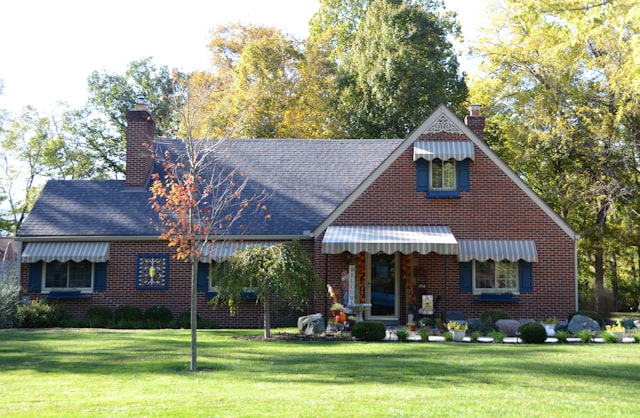
A 1920s bungalow neighborhood on 79th Street
Auburn Gresham is Chicago's Community Area 71, about 3.8 square miles of the South Side. It is anchored by the 79th Street corridor, where a new Auburn Park Metra station has been under construction, by St. Sabina Church, dedicated in 1933, and by the Thurgood Marshall branch library at 75th and Racine. The Gresham Metra station sits at 87th Street and Vincennes Avenue, and the Red Line's 79th and 87th Street stops are nearby. The St. Leo Campus for Veterans houses Catholic Charities programs and residences.
Most of it was built in one rush. The population nearly tripled in the 1920s, from 19,558 to 57,381, and what went up was bungalows and brick two-flats. The Auburn Gresham Bungalow Historic District, listed on the National Register of Historic Places, holds 264 brick Chicago bungalows built between 1918 and 1932.
The bungalow belt in numbers
The Cook County Assessor's 2025 parcel file lists 5,076 Auburn Gresham parcels in class 2-03, the one-story home of 1,000 to 1,800 square feet that most Chicagoans would call a bungalow. Another 1,273 are smaller one-story homes in class 2-02, and 1,153 are older two-story homes in class 2-05. There are 2,434 two-to-six-flat buildings in class 2-11. Condominiums barely register, at 121 units.
CMAP's community snapshot of 2020 to 2024 census estimates puts 43.0 percent of housing units in detached houses, against 25.6 percent citywide, 18.0 percent in two-unit buildings and 14.8 percent in three- and four-unit buildings. The median unit dates to 1949, close to the city's 1953, with 38.9 percent built before 1940 and 39.8 percent between 1940 and 1969. Homes are big for Chicago, a median of 6.0 rooms against 4.7.
Owners, vacancy and empty lots
Owners occupy 50.0 percent of occupied homes, above the city's 46.0 percent. Vacancy is high: CMAP counts 13.6 percent of units vacant, against 9.1 percent citywide. The Assessor lists 777 vacant-land parcels, and CMAP's land use analysis puts 131.3 acres, 5.4 percent of the community area, in vacant use.
The most common Auburn Gresham sale is a solid brick bungalow, now empty or about to be, whose kitchen, bath, wiring or furnace hasn't been updated in decades. The brick outlasts everything inside it.
Foreclosure filings tripled
The biggest change in Auburn Gresham in the last few years is foreclosure. DePaul University's Institute for Housing Studies counted 72 new residential foreclosure filings in 2021 and 217 in 2025, three times as many. In 2025, 62 foreclosure auctions were completed, and 50 of them ended with the lender taking the property. Over the longer run, 37.5 percent of the community area's residential properties had at least one filing between 2005 and 2023, against 20.5 percent for Cook County.
If you've been served, the Illinois foreclosure statute gives you 90 days from service to reinstate by paying what's past due plus costs. It also gives you a right to redeem, by paying the full amount, until the later of seven months after service or three months after the judgment, and that right ends before the judicial sale. The Circuit Court of Cook County's Mortgage Foreclosure Mediation Program offers free housing counseling and legal help once you have a summons; its helpline is (855) 452-2637. Selling while the case is pending pays the lender at closing and lets you keep whatever equity is left. The Cook County foreclosure timeline goes step by step.
One buyer in three is a company
DePaul counted 477 residential sales in Auburn Gresham in 2025, down from 656 in 2021. Business buyers made 33.1 percent of residential purchases and 31.8 percent of single-family purchases, more than double the 15.4 percent county rate. Investor interest here is real. That's useful if you need to sell, and a reason to get more than one written offer and compare them against what an owner-occupant would pay for a bungalow in good repair.
The paperwork on a Chicago bungalow sale
Water. Chicago won't issue transfer stamps without a Full Payment Certificate from the Department of Finance showing the water account is paid. The application fee is $50. On an empty house, check for a balance first.
Zoning. A residential building with five or fewer units needs a Certificate of Zoning Compliance before sale, certifying the number of legal units. The fee is $120. On a two-flat with a garden apartment, that's where an unapproved unit shows up.
Violations. The Department of Buildings posts violations on the Chicago Data Portal, by address, with the inspector's comments. Look yours up.
Lead and disclosure. For a home built before 1978, the EPA requires the federal lead pamphlet, disclosure of known lead hazards and records, and a 10-day window for the buyer to test. The Illinois disclosure form asks what you know about lead paint, lead pipes and basement flooding, and it says plainly that the parties can contract to sell the house as-is.
Empty house, tax bill, tax sale
If the house is vacant, Chicago's Municipal Code (section 13-12-125) requires the owner to register it with the Department of Buildings within 30 days of vacancy or of taking ownership, whichever is later, and to renew every six months. The Department of Buildings lists a registration fee of $250 to $500, higher if the city has already found the building in violation. The owner also has to keep it secured.
The Cook County Treasurer reported that the median Chicago residential tax bill for tax year 2024 rose 16.7 percent to $4,457. The Assessor's Homeowner and Senior Exemptions require the owner to live in the home, so a bungalow that sits empty after an owner's death loses the basis for them. If taxes went unpaid, the Treasurer's next annual tax sale is set for December 15, 2026, for delinquent tax year 2023 taxes. Tax buyers purchase the debt, not the house, and for a home with one to six units, Illinois law (35 ILCS 200/21-350, as amended by P.A. 104-553) generally gives three years from the sale to redeem. The Cook County Clerk's office prepares an estimate of the cost of redemption.
The family bungalow and probate
Cook County estates go through the Probate Division of the Circuit Court on the 18th floor of the Daley Center. According to Illinois Legal Aid Online, a small estate affidavit can't be used when the person who died owned real estate in their own name, so the family usually needs a representative appointed. With independent administration, Illinois law (755 ILCS 5/28-8) lets that representative sell the house without a separate court order, unless the will specifically left it to someone, who then has to consent in writing. The probate guide lays out the order of steps, and the Chatham page next door covers the estate-bungalow sale in more depth.
Listing it versus selling to Fair Home Cash
A well-kept Auburn Gresham bungalow with updated systems can sell to an owner-occupant with a loan, and listing may net you more. If that's your house, list it and run the numbers.
When it's the other kind, original systems, an empty house, a foreclosure case, an estate, Fair Home Cash buys Auburn Gresham houses and two-flats as-is. If the property is a fit, we make a written cash offer with the math attached. When we buy, we pay the closing costs and the transfer tax, the seller's share included, and the title company pays the mortgage, back taxes and liens from the proceeds. There's no commission and no repair list, and closing often takes 7 to 28 days once title is clear, on a date you pick. Neighbors include Chatham, West Englewood and Englewood, and the South Side overview covers the region.
Straight answers from Fair Home Cash for Auburn Gresham sellers
We have a two-flat with a garden unit. How do we know what's legal? The Certificate of Zoning Compliance required for the sale certifies the legal unit count under the zoning ordinance. If the garden unit isn't on it, a financed buyer's lender will generally treat the building as having fewer units.
Investors keep sending me letters. Should I take one? Business buyers made about a third of Auburn Gresham purchases in 2025, so the letters aren't unusual. Get offers in writing, compare at least two, and ask each buyer to show its math.
The house has been empty for a year. Am I in trouble with the city? Chicago requires vacant buildings to be registered within 30 days and renewed every six months. If that hasn't happened, register it or sell it. A sale transfers that responsibility to the buyer.
Sources: CMAP Community Data Snapshot, Auburn Gresham; Cook County Assessor parcel universe, tax year 2025; Cook County Assessor, residential classification examples; DePaul Institute for Housing Studies, Auburn Gresham; DePaul Institute for Housing Studies, Cook County; Wikipedia, Auburn Gresham, Chicago; 735 ILCS 5/15-1602; 735 ILCS 5/15-1603; Circuit Court of Cook County, foreclosure mediation; City of Chicago, Full Payment Certificates; City of Chicago, Certificate of Zoning Compliance; Chicago Data Portal, Building Violations; EPA, lead disclosure rule; 765 ILCS 77/35, Illinois disclosure form; Chicago Department of Buildings, vacant buildings; Cook County Treasurer, tax year 2024 bills; Cook County Assessor, exemptions; Cook County Treasurer, due dates and tax sale; 35 ILCS 200/21-350; Cook County Clerk, tax redemption; Circuit Court of Cook County, Probate Division; Illinois Legal Aid Online, small estate affidavit; 755 ILCS 5/28-8
