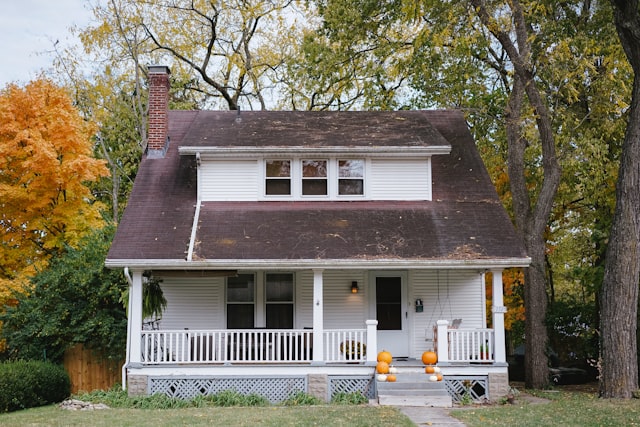
Seven in ten West Pullman homes are detached houses
West Pullman, on Chicago's far South Side, runs from 115th Street down to the Calumet River. CMAP's census snapshot counts about 70 percent of its housing units as detached single-family homes, against about a quarter citywide, and the typical home is roomier than the city's, with three bedrooms the most common size.
The houses are mostly mid-century. The median year built is 1953. About 51.9 percent went up between 1940 and 1969, and another 31.7 percent are older than that, so roughly 84 percent were built before 1970. For any home built before 1978, the state's lead brochure goes to the buyer before the contract, and federal rules add the EPA pamphlet, a lead warning statement and a 10-day window for the buyer's own lead inspection.
Stewart Ridge, Gano, Kensington and Maple Park
West Pullman was stitched together from Kensington, Gano, Stewart Ridge and the West Pullman subdivision, and Maple Park came later, at the western edge. A big old house near Stewart Ridge and a newer house in Maple Park can be very different sales. Old factories left contamination, and part of the industrial district was named an EPA brownfield.
One unit in five sits empty
CMAP counts 2,153 vacant housing units here, 19.2 percent of the stock, against 9.1 percent citywide. In 2000 the vacancy rate was 8.5 percent. Still, 60.1 percent of occupied homes are owner-occupied, well above the city's 46.0 percent, though down from 70.0 percent in 2000.
If you inherited a house that now sits empty, Chicago's vacant building ordinance applies. You register it with the Department of Buildings within 30 days after it becomes vacant or you take ownership, whichever is later, and renew every six months. The fee is $300 per six-month period, or $600 up front if the building was cited before you registered. Fines run $500 to $1,000 per offense, each day counts separately, and unpaid fines become a lien. More on estates is at selling an inherited house in Illinois.
West Pullman's foreclosure numbers, then and now
DePaul counts 41.5 percent of West Pullman's residential properties as having had at least one foreclosure filing between 2005 and 2023. Filings ran as high as 586 in 2008 and were 109 in 2025. There were 51 completed foreclosure auctions in 2025, and 76.5 percent of them ended with the bank taking the house.
Your case would land in the Chancery Division's Mortgage Foreclosure Section at the Daley Center. You can reinstate within 90 days after service by catching up the missed payments and costs. Redemption runs until the later of 7 months from service or 3 months from the judgment, and the sale comes after that, not before. Free counseling and legal help start with the mediation helpline at (855) 452-2637. Back taxes run on their own clock, and the Cook County page covers the December 15, 2026 tax sale and the October 1, 2026 second-installment due date. The Cook County foreclosure timeline covers the wider process.
The honest math on $160,000
DePaul's price index puts the 2025 median single-family sale at $160,000 for its Chatham/West Pullman submarket, which also takes in Roseland, Chatham, Pullman, Calumet Heights, Avalon Park, Burnside and Riverdale. Treat it as a ballpark, not your house.
List at $160,000 and commission at about 4.9 percent (Clever's Illinois average, updated September 2026) takes roughly $7,800. Closing costs near 1.2 percent add about $1,900. As seller you pay the $160 state stamp, the $80 county stamp and Chicago's $480 CTA portion, while the buyer usually covers the $1,200 city portion. Add the $50 water Full Payment Certificate fee and the $120 zoning certificate that Chicago requires for homes with five or fewer units. That's about $10,700 before repairs. Chicago's median residential tax bill for tax year 2024 was $4,457, around $370 a month while you wait on a financed buyer.
Business buyers made 34.1 percent of West Pullman's residential purchases in 2025. So if the property is a fit, a cash buyer may make an offer, you pick the closing date, and listing instead is fine too. Run both numbers, and see the Chicago page for citywide rules.
Sources: CMAP Community Data Snapshot, West Pullman; DePaul Institute for Housing Studies, West Pullman; DePaul IHS, Cook County House Price Index; Chicago Department of Buildings, vacant building ordinance; Chicago Department of Buildings, vacant building fees; Circuit Court of Cook County, foreclosure mediation; 735 ILCS 5/15-1603, redemption; Cook County Treasurer, tax year 2024 bills; Cook County Clerk, transfer fees; City of Chicago, Real Property Transfer Tax; City of Chicago, Full Payment Certificates; Clever commission survey
